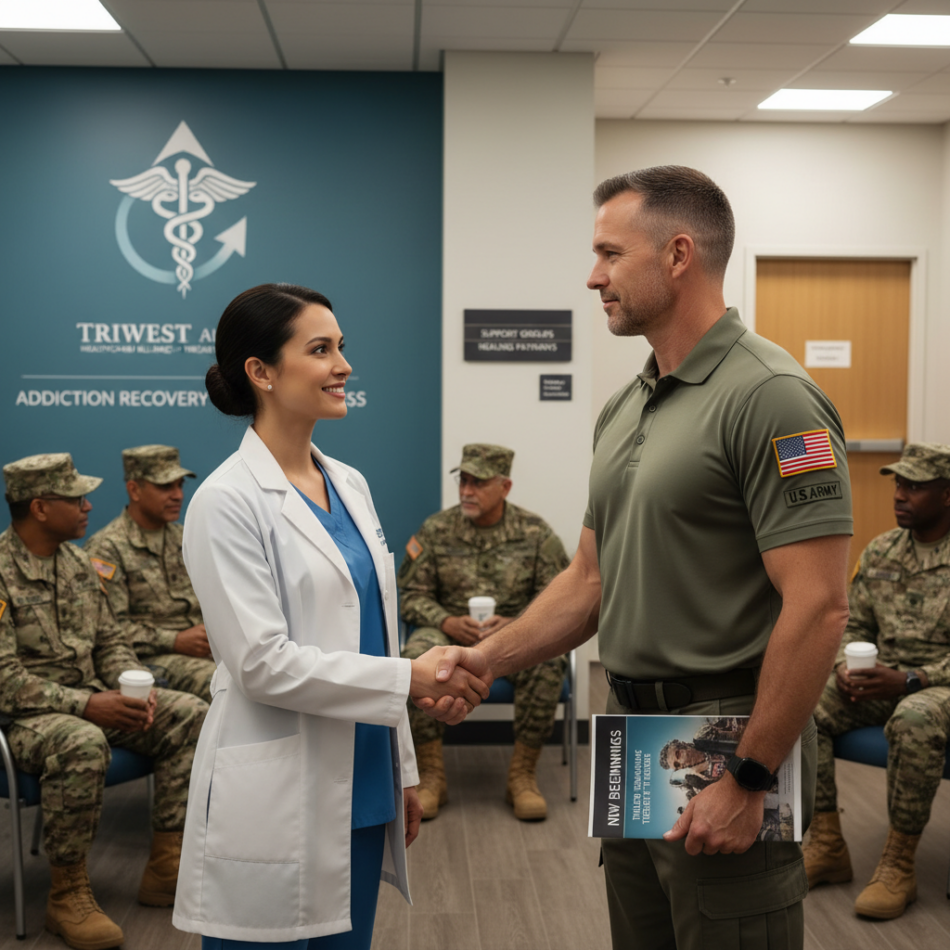
Understanding veterans trauma therapy with TRICARE insurance
If you are a veteran, active-duty service member, or a military family member living with trauma or PTSD, you may be wondering how veterans trauma therapy with TRICARE insurance actually works in real life. You might also be asking a more practical question: who can you trust to understand your story, respect your service, and work within your TRICARE West or TriWest benefits so that you can focus on healing instead of paperwork.
At Centered Health, you receive care that is both clinically advanced and built around the realities of military life. TRICARE covers office-based outpatient psychotherapy when it is medically or psychologically necessary to treat a diagnosed mental health disorder, including PTSD and related conditions [1]. This foundation allows you to access a wide range of trauma treatments without carrying the full financial burden on your own.
You may feel pressure to push through symptoms or to minimize your experience. Yet research shows that between 11 and 20 percent of veterans who served in Operations Iraqi Freedom and Enduring Freedom experience PTSD in any given year [2]. You are not alone in what you are feeling, and there is specialized support available to you.
How military trauma shows up in everyday life
Military trauma and PTSD often look different from what you might see in civilian examples. You may not describe yourself as “traumatized,” but you might recognize patterns that are affecting your daily life, relationships, or work.
Common trauma and PTSD symptoms in military and veteran populations include:
- Intrusive memories, flashbacks, or nightmares about combat, deployments, or assaults
- Feeling constantly on guard, jumpy, or scanning for danger
- Irritability, sudden anger, or emotional numbness
- Avoiding people, places, or conversations that remind you of service or trauma
- Difficulty sleeping or concentrating
- Using alcohol, prescription medications, or other substances to calm down or forget
- Guilt or shame about actions, survival, or events you could not control
- Feeling disconnected from family, children, or civilian life
Many TRICARE beneficiaries live with multiple conditions at the same time, such as PTSD, depression, substance use disorders, or traumatic brain injury [3]. This combination can make daily functioning more complicated and can also make it harder to ask for help.
When you begin care at a TRICARE approved PTSD treatment facility like Centered Health, your clinicians take time to understand the full picture, not just one diagnosis at a time.
Why veteran-focused, TRICARE-covered care matters
You might have tried counseling before and felt misunderstood or judged. Military experiences are complex, and not every provider is trained to respond in ways that feel respectful and effective for you.
TRICARE serves millions of beneficiaries, including active duty personnel, retirees, and military families [3]. Within this large system, it is important to choose a trauma program that:
- Is familiar with TRICARE benefits and authorization processes
- Understands combat exposure, repeated deployments, military sexual trauma, and family stress
- Offers evidence-based PTSD treatment specifically adapted for service members and veterans
- Coordinates care for co-occurring conditions, including substance use disorders and brain injuries
At Centered Health, you are not asked to explain basic military culture. Instead, you start from a place of recognition and respect. Your team approaches you as a whole person whose symptoms make sense in the context of what you have lived through.
If you are looking for a military trauma treatment center TRICARE recognizes, working with a provider who accepts your plan from the start helps streamline your path into treatment and reduces delays in getting the care you need.
What TRICARE typically covers for trauma and PTSD treatment
TRICARE provides coverage for a wide range of trauma and PTSD services when they are medically or psychologically necessary. Understanding these options helps you see how your benefits can support your recovery.
At a high level, TRICARE may cover:
-
Outpatient psychotherapy
Office-based, discussion-based therapy is covered for diagnosed mental health disorders, including trauma and PTSD, when clinically necessary [1]. This can include individual, group, and family sessions focused on trauma recovery. -
Psychological testing and assessment
You may receive structured assessments to clarify diagnoses, understand symptom severity, and guide treatment planning. These services are covered when necessary to evaluate and treat your condition [1]. -
Medication assisted treatment for substance use
If you use substances to cope with trauma, TRICARE covers medication assisted treatment when prescribed by authorized providers as part of a comprehensive plan [1]. This allows you to address both addiction and trauma together. -
Collateral visits with family or support persons
When your clinician recommends it, TRICARE covers appointments that include a family member or responsible person who plays an important role in your mental health support [1]. This can help your loved ones better understand PTSD and learn how to support your recovery. -
More intensive psychiatric care, when appropriate
In some cases, TRICARE also covers higher levels of mental health treatment, including hospitalization and specialized treatments such as electroconvulsive therapy, when medically appropriate and delivered by TRICARE-authorized providers [1].
As a TRICARE beneficiary, you generally do not need referrals for most outpatient mental health appointments with authorized providers, except for services like psychoanalysis or certain specialized substance use treatments [4]. This flexibility can help you start with PTSD counseling covered by TRICARE sooner, rather than waiting for multiple approvals.
Evidence-based trauma therapies you can access
When you enter veterans trauma therapy with TRICARE insurance at Centered Health, your treatment plan is personalized and built from interventions that are supported by research for PTSD and trauma-related conditions.
Core trauma-focused therapies
Your plan may draw from several evidence-based approaches, such as:
-
Cognitive Behavioral Therapy (CBT)
CBT helps you identify and shift unhelpful beliefs that developed in the wake of trauma. You learn to recognize patterns, challenge automatic thoughts, and practice new ways of responding to triggers. This type of therapy is widely used for PTSD and related anxiety and depressive symptoms. -
Trauma-focused CBT and exposure-based methods
When appropriate and at a pace that feels safe, you may work through painful memories in a structured way so that your nervous system no longer reacts as if the trauma is happening again. This is never rushed and always guided by your readiness and consent. -
Therapies for co-occurring substance use
If you are struggling with alcohol, prescription medications, or other substances, your treatment plan can include integrated approaches that address both PTSD and addiction. TRICARE covers medication assisted treatment when clinically indicated, so your care can include both therapy and medication support when needed [1]. -
Family and relationship-based work
Your clinicians can involve partners or family members in collateral visits to help rebuild communication and understanding in your home environment. These sessions are covered when deemed necessary to support your mental health treatment [1].
Because many TRICARE beneficiaries live with overlapping conditions such as major depression, substance use disorders, and traumatic brain injuries [3], your clinicians pay close attention to how your symptoms interact and adapt evidence-based strategies to your specific needs.
If you are exploring your options, you can learn more about a structured TRICARE PTSD treatment program and how it aligns with your clinical needs and personal goals.
Matching therapy level to symptom severity
Not every veteran needs the same level of care. You might do well in weekly outpatient sessions, or you may need a more structured daily program, especially if you are dealing with high-risk symptoms or complex trauma.
To help you and your care team choose the right level of support, it can be useful to see how different treatment settings compare:
| Level of care | Typical focus | When it may fit you |
|---|---|---|
| Outpatient therapy | Weekly or biweekly sessions focused on coping skills, processing trauma, and stabilizing mood | You are functioning at work or home but struggling with distressing symptoms, sleep, anger, or relationships |
| Intensive outpatient / day programming | Multiple sessions per week, more structured schedule, group plus individual therapy | You need more support than weekly therapy but can safely live at home |
| Residential treatment | 24-hour structured environment, intensive daily therapy and support | Symptoms, substance use, or safety concerns make it difficult to manage on your own and you need a focused healing environment |
If you need a higher level of care, a PTSD residential treatment TRICARE program gives you space away from daily triggers while you build the skills and stability needed for long-term recovery.
Why veterans specifically trust Centered Health
When you decide where to begin trauma therapy, you are looking for more than a list of services. You want to know that you will be believed, that your symptoms will be taken seriously, and that your treatment will match the realities of your life. Centered Health focuses on several key elements that help build that trust for veterans and military families.
Culturally competent, veteran-aware care
Your providers understand that combat trauma, repeated deployments, and military sexual trauma affect more than just your memories. Female active-duty service members and veterans, for example, face elevated risks of trauma-related mental health issues related to sexual harassment and assault, with one study noting that 33 percent of female veterans reported sexual assault with long-term health and emotional consequences [3].
At Centered Health, you can expect:
- Clinicians who are familiar with the impact of combat exposure, loss, and moral injury
- Sensitivity to the unique experiences of female service members and veterans
- Awareness of how rank, unit culture, and command climate can shape your response to trauma
- Respect for how military values like loyalty and duty interact with healing and help-seeking
This cultural competence reduces the time you spend explaining the basics and lets you move more quickly into meaningful work in therapy.
Integrated care for you and your family
Military life does not affect only the service member. Spouses and children of deployed personnel often experience their own mental health challenges, and services for these family members are sometimes insufficient within broader TRICARE networks [3].
Centered Health takes a family-informed approach so that:
- Your treatment team understands how your symptoms impact your home life
- Your loved ones can be included in collateral sessions when clinically helpful and covered by TRICARE [1]
- You have support in rebuilding connection and communication after deployments, injuries, or periods of emotional distance
If you are a spouse or family member seeking support for the veteran in your life, a veterans trauma rehab TRICARE program gives you a clear path to get your loved one into care while also considering your needs as part of the healing process.
Streamlined use of TRICARE West and TriWest benefits
The administrative side of care can be overwhelming, especially if you are already managing symptoms, families, or transitions out of active duty. At Centered Health, you receive guidance navigating your TRICARE West or TriWest plan from intake through discharge, including:
- Clarifying what your specific plan covers for PTSD and trauma treatment
- Coordinating pre-authorizations when required for higher levels of care [4]
- Helping you understand copays, deductibles, and any out-of-pocket costs before you begin
- Working with TRICARE for Life coordination with Medicare, when applicable [4]
When you seek a TRICARE covered PTSD therapy program, this level of administrative support can make the difference between delaying care and getting started on a realistic timeline.
Specialized programs for combat and deployment-related PTSD
Combat veterans from recent conflicts report high exposure to traumatic events, including losing friends in combat or witnessing severe injuries and death [3]. These experiences can surface months or even years after you return home.
Centered Health offers programming that speaks directly to these realities, so your story is understood in detail, not in general terms.
Combat and operational trauma
If you are seeking combat PTSD treatment TRICARE West can support, you can expect care designed around:
- Repeated combat exposure and the cumulative impact of multiple tours
- Survivor guilt and moral injury, especially when decisions had life-or-death consequences
- The experience of coming home while feeling detached from civilian life
- The tension between wanting to protect loved ones from your stories and needing to be understood
Your treatment plan may combine individual trauma therapy, group work with other veterans, medication management when needed, and structured skills training so that you can experience fewer intrusive memories and greater ability to engage in daily life.
Trauma linked to military sexual assault and harassment
For service members and veterans who have survived sexual assault or harassment in the military, trust can feel like the primary casualty. Your symptoms may include hypervigilance, shame, self-blame, and difficulty with intimacy or authority figures.
Centered Health approaches this type of trauma with:
- Safety planning and stabilization before any intensive trauma processing
- Respect for your pace and your boundaries in therapy
- Options for gender-specific therapists or groups when available
- Coordination of care across different services if you have both trauma and ongoing legal or administrative processes
If you are using veteran trauma therapy TRICARE West coverage, your team works to ensure that your benefits are used in ways that prioritize your emotional and physical safety at every step.
Accessing trauma therapy through TRICARE West
Getting started can feel like the hardest part. You might already have tried to navigate TRICARE on your own, or you may not be sure what to ask for. Centered Health helps you turn your intention to seek help into an actionable plan.
Typically, your path into care involves:
-
Initial contact and benefits check
You reach out to the Centered Health admissions team, who review your TRICARE West or TriWest coverage and explain what your plan includes for PTSD and trauma care. If you are looking for a PTSD treatment center that accepts TRICARE West, this first step confirms that your care can be aligned with your benefits. -
Assessment and diagnosis
You meet with clinicians who complete a comprehensive evaluation, which may include psychological testing when necessary to clarify diagnoses and treatment needs [1]. Your treatment level, such as outpatient or residential, is recommended based on this assessment. -
Authorization and scheduling
When your care requires prior authorization, such as for inpatient or residential levels, the Centered Health team coordinates directly with TRICARE to secure approvals [4]. Once authorized, you receive a start date and a clear explanation of your expected schedule. -
Active treatment and family involvement
You participate in an individualized TRICARE PTSD recovery program that may include individual therapy, group work, family sessions, and medication management. Your progress is reviewed regularly, and your plan is adjusted as needed. -
Transition planning and aftercare
As you move toward discharge, you and your team plan next steps that may include ongoing outpatient therapy, peer support, or telehealth options. This is especially important because mental health problems can continue to emerge or shift for months or years after service ends [3].
If you are located in the TRICARE West region and need a TRICARE West trauma treatment program or military PTSD rehab TRICARE West supports, Centered Health works to minimize gaps between levels of care so that you maintain momentum in your recovery.
Taking your next step toward recovery
You have carried heavy experiences for a long time, often in silence. Veterans and military families frequently avoid seeking PTSD treatment because of stigma, fear, or a belief that they must handle everything alone [2]. Yet insurance coverage, including TRICARE, exists to help you access the care you have earned through your service [2].
Centered Health brings together:
- Veteran-informed, culturally competent trauma clinicians
- Evidence-based therapies tailored to military trauma and co-occurring conditions
- Practical support in using your veterans trauma therapy TRICARE insurance benefits effectively
If you are ready to explore care options, you can connect with Centered Health for a conversation about which TRICARE West trauma therapy clinic services are right for you, whether that is outpatient sessions, a focused trauma therapy program TRICARE West supports, or a more intensive TRICARE PTSD treatment program.
You do not have to keep managing trauma alone. With the right support, you can move toward safety, connection, and a life that is not defined by what you have survived.