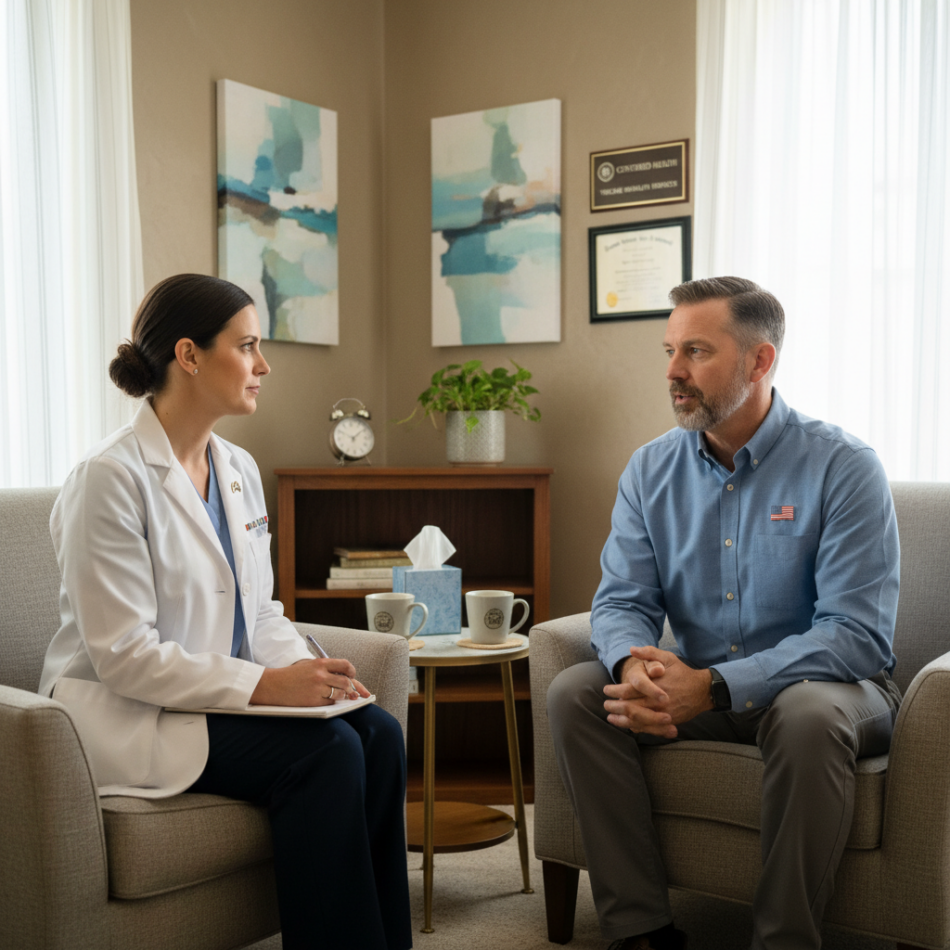
Understanding veterans trauma rehab with TRICARE
If you are living with service-related trauma or PTSD, navigating veterans trauma rehab with TRICARE can feel overwhelming. You may know you need help, but you are not sure what is covered, where to go, or how to make your benefits work for you.
Across the country, the Department of Veterans Affairs (VA) and the Department of Defense (DoD) support extensive PTSD services, yet only a little more than half of service members and veterans who screen positive for PTSD ever receive treatment, often due to stigma, access issues, and logistical barriers [1]. Understanding your coverage and options is a critical first step in changing that.
TRICARE, including TRICARE West and TriWest, provides comprehensive behavioral health coverage that can help you access evidence based PTSD and trauma care. When you use your TRICARE benefits at a trauma focused program that understands military culture, you can focus less on paperwork and more on healing.
The impact of military trauma and PTSD
Combat, deployment, military sexual trauma, training accidents, and repeated exposure to life threatening situations can leave deep psychological scars. Estimates suggest that 13 to 20 percent of the 2.6 million U.S. service members deployed to Iraq and Afghanistan have experienced PTSD based on DSM IV TR criteria [1].
You may notice:
- Intrusive memories or flashbacks
- Nightmares or disrupted sleep
- Hypervigilance, feeling on edge, or easily startled
- Irritability or anger that feels hard to control
- Emotional numbing or disconnection from loved ones
- Avoidance of people, places, or situations that remind you of trauma
- Misusing alcohol, prescription medications, or other substances to cope
Many veterans also live with traumatic brain injury (TBI), chronic pain, depression, or anxiety along with PTSD. The VA’s Polytrauma System of Care provides coordinated rehabilitation for veterans and service members with polytrauma and TBI, through a nationwide network of specialized facilities [2]. If you suspect TBI or complex injuries, this integrated approach is important to consider alongside PTSD treatment.
When these symptoms go untreated, they can impact your family, career, and sense of identity. The goal of trauma rehab is not to erase what you have lived through, but to help you regain control, reduce distress, and reconnect with your life in a way that feels meaningful to you.
How TRICARE supports PTSD and trauma treatment
TRICARE is designed to give service members, veterans, and eligible family members access to comprehensive mental health care, including PTSD treatment. In 2011, millions of beneficiaries were eligible for DoD medical care, and 5.5 million were enrolled in TRICARE with access to mental health services delivered by trained professionals [1].
Depending on your specific TRICARE plan and region, you may have coverage for:
- Outpatient individual therapy and group therapy
- Intensive outpatient and partial hospitalization programs
- Inpatient psychiatric care when medically necessary
- Medication management and psychiatric evaluation
- Residential PTSD and trauma focused programs when criteria are met
If you are specifically researching a ptsd treatment center that accepts tricare west, it helps to look for facilities that are explicitly in network and familiar with military authorization requirements.
TRICARE coverage is especially valuable when you are seeking specialty care like a tricare approved ptsd treatment facility that focuses on combat trauma, operational stress, or military sexual trauma. These programs are built around your culture, language, and experiences, which often makes it easier to engage in treatment.
VA programs and TRICARE: How they work together
You may already be connected with the VA for healthcare or benefits. The VA operates nearly 200 PTSD treatment programs across the United States, offering counseling, Cognitive Processing Therapy (CPT), medication management, and other services for veterans with PTSD [3]. The system treated more than 400,000 veterans for PTSD in 2010, across both specialized PTSD programs and general mental health services, including Vet Centers staffed by social workers and psychologists [1].
In addition, over 300 Vet Centers provide free confidential counseling, alcohol and drug assessments, and other support for combat veterans and those who experienced military sexual trauma [3]. These can be a strong complement to TRICARE covered care.
The VA and DoD have collaborated on clinical practice guidelines for PTSD since 2004, updated in 2010, to align prevention, screening, diagnosis, and treatment across both systems [1]. That means whether you use TRICARE or VA services, your care is guided by similar evidence based standards.
If you believe your PTSD or trauma is service connected, you may also qualify for disability compensation and additional VA benefits [3]. These benefits can help you sustain your recovery long term, especially if symptoms have affected your ability to work.
Common PTSD symptoms addressed in rehab
When you enter a veterans trauma rehab program that works with TRICARE, your team focuses on the full range of symptoms you may be experiencing, not just the ones that show up on screening forms.
Re experiencing and intrusive symptoms
Rehab programs help you address:
- Flashbacks that feel like you are reliving the trauma
- Distressing memories that come out of nowhere
- Nightmares about combat or other traumatic events
Evidence based trauma therapies gradually help you approach these memories in a controlled and safe way so they lose some of their power over you.
Avoidance and emotional numbing
You might notice that you steer clear of conversations, people, or places that remind you of what happened, or you feel emotionally shut down. Treatment helps you:
- Reconnect with emotions in a way that feels manageable
- Rebuild relationships with family and fellow veterans
- Slowly re engage with activities you used to value
Hyperarousal, anger, and sleep issues
Hypervigilance can keep you on guard at all times, which is exhausting. Rehab programs teach you skills to:
- Reduce physical tension and anxiety
- Improve sleep hygiene and reduce nightmares
- Manage anger and irritability before they escalate
If you are seeking combat ptsd treatment tricare west, look for programs that specifically acknowledge operational stress, rules of engagement, and the difficult decisions you may have had to make in theater.
Evidence based therapies you can access with TRICARE
Effective veterans trauma rehab is built on therapies proven to work for PTSD in military and veteran populations. The VA, DoD, and TRICARE backed programs typically emphasize:
Cognitive Processing Therapy (CPT)
CPT is a structured form of cognitive behavioral therapy that helps you:
- Identify unhelpful beliefs about the trauma such as guilt, shame, or blame
- Challenge and reframe distorted thoughts
- Develop a more balanced and realistic understanding of what happened
The VA lists CPT among its core therapies for PTSD [3]. In a tricare ptsd treatment program, CPT may be provided individually or in groups that are specifically for veterans.
Prolonged Exposure (PE) therapy
PE helps you:
- Safely confront trauma memories and reminders instead of avoiding them
- Gradually reduce fear and anxiety associated with triggers
- Regain a sense of control over your life
Many tricare covered ptsd therapy programs include PE as a gold standard approach, particularly for combat trauma and deployment related PTSD.
Eye Movement Desensitization and Reprocessing (EMDR)
EMDR uses bilateral stimulation like rapid eye movements or taps while you focus on traumatic memories. This process supports the brain’s natural healing and can reduce the emotional intensity of traumatic images and thoughts.
If you are considering ptsd therapy covered by tricare west, ask whether EMDR is available and how it is integrated with other therapies.
Medication management
Psychiatric medications can help reduce PTSD symptoms, depression, anxiety, and sleep disturbances. In a tricare ptsd recovery program, you typically meet with a prescribing provider who:
- Reviews your medical and service history
- Coordinates with your therapist and primary care
- Adjusts medications to support your therapy work and functioning
Medication is usually most effective when combined with trauma focused psychotherapy rather than used alone.
Levels of care available with TRICARE West and TriWest
Your symptoms, safety, and support system will determine which level of care is most appropriate. TRICARE offers coverage across a continuum, when medically necessary and authorized.
Outpatient therapy and counseling
This includes weekly or biweekly sessions with a therapist, and is often a starting point. You may also access ptsd counseling covered by tricare in specialized veteran programs that understand military culture.
If your symptoms are moderate and you have a stable environment and strong support system, outpatient care can be a good fit.
Intensive outpatient and partial hospitalization
If you need more structure but not 24 hour care, intensive outpatient or partial hospitalization programs may be recommended. These programs offer:
- Multiple therapy sessions per week
- Group and individual counseling
- Skills training and psychoeducation
When these services are part of a tricare west trauma treatment program, your team can focus on both PTSD and related issues like substance use, chronic pain, or depression.
Residential and inpatient PTSD care
For severe symptoms, safety concerns, or complicated co occurring conditions, you may benefit from ptsd residential treatment tricare. In this level of care you live on site for a period of time and participate in:
- Daily individual and group therapy
- Trauma focused treatment tracks
- Medication management and medical oversight
- Structured routines that support stabilization
If you are seeking a military trauma treatment center tricare program, ask about their experience treating veterans at a residential level, especially when substance use or TBI are also involved.
Why veteran specific, culturally competent care matters
Not every therapist understands what it is like to stand a post at 0300, deploy repeatedly, or transition abruptly back to civilian life. Culturally competent veterans trauma rehab programs are staffed by clinicians who are trained in military culture, often include veterans on the team, and are comfortable talking about:
- Combat experiences, moral injury, and loss
- Military sexual trauma and harassment
- The impact of rank, unit culture, and leadership
- Reintegration challenges with family, work, or school
Veteran focused programs that accept TRICARE know how to navigate military commands, work with case managers, and communicate in a way that respects your service. When you choose a veteran ptsd treatment tricare program, you are more likely to feel seen, heard, and understood.
A strong tricare west trauma therapy clinic will also coordinate with your VA providers when you consent, which helps create continuity of care as you move between systems.
Culturally competent care is not about special treatment. It is about receiving trauma care that respects who you are, where you have been, and what you carry.
Dual diagnosis, TBI, and complex needs
Many veterans do not experience PTSD in isolation. Substance use, chronic pain, depression, anxiety, and TBI often overlap. The VA’s Polytrauma System of Care was designed to meet the needs of veterans and service members with complex brain injuries and multiple traumas, supported by a nationwide network of rehabilitation centers, outpatient teams, and points of contact [2].
When you choose a military ptsd treatment covered by tricare, look for programs that:
- Screen for and treat substance use disorders
- Understand the cognitive and emotional impact of TBI
- Offer integrated treatment for depression and anxiety
- Coordinate medical and psychiatric care
A comprehensive trauma therapy program tricare west may include neuropsychological assessment, pain management, and close collaboration with your existing VA or DoD care team.
How to maximize your TRICARE benefits
You work hard for your benefits. Using them strategically can help you get the most out of veterans trauma rehab.
Confirm eligibility and network status
Start by confirming:
- Your TRICARE plan and region, including whether you are in TRICARE West or covered through TriWest
- Whether the facility you are considering is in network
- What referrals or pre authorizations are required for the level of care you need
If you are exploring military ptsd rehab tricare west, many facilities have admissions teams who will verify your benefits, explain any out of pocket costs, and help secure authorization for treatment.
Choose trauma focused, veteran informed programs
Look for indicators that a program is truly veteran focused:
- Explicit experience with combat related PTSD and military trauma
- Separate tracks or groups for veterans and active duty
- Familiarity with VA and DoD guidelines for PTSD treatment [1]
- Willingness to coordinate with your military command when appropriate
Resources like veterans trauma therapy tricare insurance and veteran trauma therapy tricare west can help you narrow options to programs that align with your needs.
Understand your treatment options and rights
Take time to ask:
- What types of tricare covered ptsd therapy are offered
- How long typical treatment episodes last
- How family members can be involved in care
- What aftercare or step down services are available
You have the right to understand your diagnosis, participate in treatment planning, and request modifications if something is not working. Programs aligned with a tricare ptsd treatment program model should be transparent and collaborative.
When trauma rehabilitation is urgent
If you or someone you care about is in immediate crisis, waiting for an appointment is not an option. The Veterans Crisis Line provides confidential, free support 24 hours a day, 7 days a week, 365 days a year. You can reach trained responders, many of whom are veterans, by calling 988 and pressing 1, by text or online chat [3].
If you are already connected to the VA Polytrauma System of Care and are in crisis, the Veterans Crisis Line is also available as an immediate resource alongside your ongoing rehabilitation supports [2].
For urgent safety concerns, including suicidal thoughts, self harm, or danger to others, seek emergency care locally or call 911. Once the immediate crisis is addressed, you can work with TRICARE and your providers to plan the next phase of treatment, whether that means inpatient stabilization, military trauma therapy tricare west, or step down to outpatient services.
Taking your next step with veterans trauma rehab and TRICARE
You do not have to figure all of this out on your own. Between VA services, Vet Centers, the Polytrauma System of Care, and TRICARE covered programs, you have options. The key is choosing a path that fits your symptoms, your responsibilities, and your goals for recovery.
If you are ready to explore specialized care, you can:
- Review your options for tricare west trauma treatment program services
- Consider whether you need outpatient care, intensive treatment, or ptsd residential treatment tricare
- Look for a tricare west trauma therapy clinic that understands combat stress, moral injury, and the realities of military life
Your experience matters. With the right support, you can use your veterans trauma rehab TRICARE benefits to move from surviving to living, on your terms and at your pace.