Substance Use and Addiction Treatment in Southern California: Personalized Care That Addresses the Whole Person
Most adolescents and young adults arrive at residential treatment resistant. “I’m only here because I’m forced,” they say, arms crossed, barely making eye contact. But within three to five days, something often shifts. Not because anyone pressured them, and not because a rule finally clicked. It may shift once they experience care that treats them as a whole person, not just someone with a substance problem. If you are a parent reading this at midnight because the vaping turned into something harder, or the drinking stopped being a phase, that three-to-five-day observation is worth holding onto. Your child’s refusal to engage right now is not the end of the story. It is usually the very beginning of it.
You already know your child is more than their substance use. The hard part is finding a place that treats them that way. This is what whole-person addiction treatment in Southern California actually looks like when it is done with care, and how to tell the difference before you commit.
Why treating only the substance can be less effective
Substance use rarely shows up alone. Underneath it there is often something else doing the heavy lifting: depression that started long before the first drink, anxiety that makes a room feel unsurvivable, trauma that never got named, or an eating disorder or obsessive thoughts that no one connected to the substance use at all. When a program treats the drinking or the pills and ignores the depression, the anxiety, or the trauma feeding it, the substance use may return. It can return because the reason it started may still be there.
That is why treatment at Centered Health addresses substance use alongside the conditions that so often ride with it: depression, anxiety, trauma, obsessive-compulsive disorder, suicidal ideation, eating disorders, and post-traumatic stress. These are treated together, in the same program, at every level of care, using family therapy, individual therapy, multifamily therapy, and group therapy that all point in the same direction. Your child is not handed off between a “substance team” and a “mental health team” who never talk to each other.
The research backs this up. The National Institute of Mental Health reports that substance use disorders and other mental health conditions frequently occur together, and that treating one while ignoring the other may be less effective. For your family, the takeaway is simple. If a program only asks about the drug and never asks what your child is trying to escape, keep looking.
Residential, PHP, or IOP: how to know which one your child actually needs
The right level of care is a clinical decision, not a budget decision or a convenience decision. Residential treatment gives your child 24/7 observation and structure, which matters when they are in crisis, when the substance use is severe, or when the home environment is simply not safe or stable enough to support early recovery. Partial hospitalization (PHP) and intensive outpatient (IOP) are step-down options, meant for when your child has stabilized enough to spend part of the day living life again while still getting intensive support.
Clinicians use the ASAM Criteria to match a person to the right level, weighing withdrawal risk, co-occurring conditions, and how supportive or dangerous the home setting is. That framework keeps the decision honest, and it keeps the focus on your child rather than on what is easiest to bill.
Centered Health offers residential care in serene Southern California settings that are built for this work: a beachfront estate in Malibu for adolescents, mansions in Agoura Hills, and a 25-acre estate in Moorpark, all with round-the-clock observation. When your child is ready to step down, PHP and IOP continue the work through outpatient programs, including the modern outpatient center in Culver City, CA. Geography is not a luxury detail here. Space, quiet, and distance from the same people and patterns that fueled the crisis give your child room to think that a chaotic environment cannot.
Here is the part most families never hear about. The admissions team does not accept an arbitrary number of covered days as the final word. They advocate with insurance carriers to authorize 45 to 90 days of residential care based on clinical necessity, because a two-week authorization for a child who needs three months is not treatment. It is a countdown.
When the worksheets stop working: reaching a child conventional therapy hasn’t
Sometimes the standard approaches do not land, and that does not mean your child is a lost cause. It means the door in has not been found yet. Consider a real example from the Malibu adolescent residential facility. A 15-year-old girl arrived in extreme depression. Her licensed therapist tried every conventional approach, every tool in the book, and could not reach her. She was withdrawn and nearly silent, described by the team as being like a tiny, itty bitty mouse.
Rather than repeat the same interventions louder, the CEO took a completely different route on the idea that laughter can be helpful, and brought in two comedy improv performers to work with the small group of six children once a week, in the evenings after dinner. Over her roughly 90-day stay, she went from silent and closed off to smiling, speaking, and engaging more. Every other part of her therapeutic experience lifted with it, and she eventually stepped down to PHP and IOP with momentum behind her.
This is what “innovative therapies beyond conventional approaches” means in practice, and it is not a gimmick. Bringing improv, movement, or connection-based work into a residential setting for a child in crisis takes clinical sophistication to deploy safely, alongside the traditional evidence-based care, not instead of it. If your child has already been through therapy that “did not work,” that history is information, not a verdict. The right team reads it as a map for what to try next.
How a real clinical team handles the conditions other programs pass on
You can usually tell within the first real conversation whether a team actually understands your child’s specific condition, or whether they are just nodding along to close the deal. One prospective family worried that the program could not handle their child’s obsessive-compulsive disorder, and a phone call did not convince them. That is a fair instinct. OCD alongside substance use is complex, and plenty of programs quietly hope it will not come up.
What changed their mind was the facility tour. During it, they had an educational, conversational dialogue with a therapist who understood OCD deeply, not superficially. It was not a sales pitch. It was two people talking honestly about a hard condition, and it left the family feeling comfortable enough to enroll. Their child went on to engage positively with the program. The lesson for you: ask specific questions about your child’s exact diagnosis and listen for whether the answers show real depth or just reassurance.
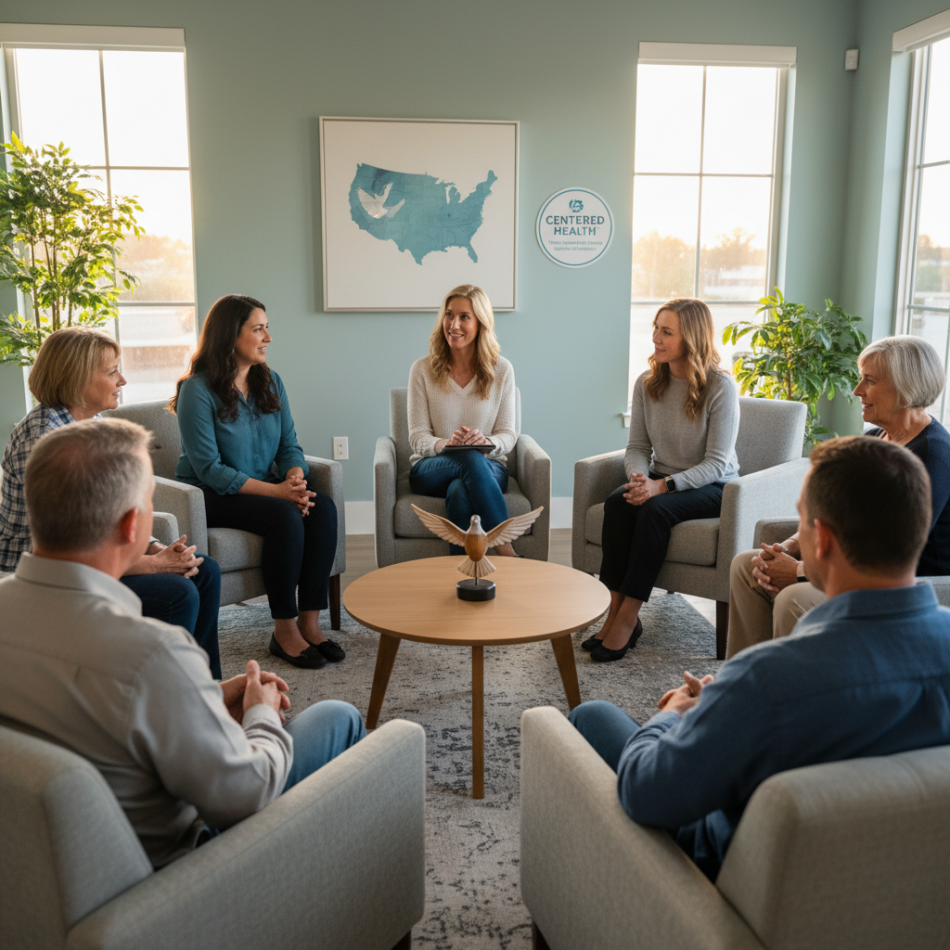
That depth is possible because of the model. The adolescent residential setting in Malibu is small, only six children, with a high staff-to-client ratio. That scale is not an accident, and it is not easy to replicate. It is what allows individual therapy, family therapy, multifamily therapy, and group therapy to work as one coordinated plan instead of a schedule of disconnected appointments. A therapist who is responsible for six kids can actually know your child, notice the OCD ritual creeping back in, and adjust. A therapist buried under thirty cannot. When conditions overlap, that individual attention is not a nicety. It is the whole thing.
Why you should know your exact costs before your child is admitted, not after
Money fear is real, and pretending it is not helps no one. You may be concerned about getting your child the care they need and then facing unexpected bills. Good insurance advocacy is part of whole-person care precisely because that fear will pull families out of treatment early if it is left unaddressed.
Here is how the process works, concretely. On admission, your family sends the insurance information, and the Centered Health team calls the carrier directly and stays on the line for 45 to 55 minutes with a live agent to confirm your exact deductible, your co-pay, and your coverage percentage. Then they report back to you right away with real numbers, not vague estimates, so there are no surprises after the fact. In real cases, families have had benefits come back with a low deductible and no co-pay at all, which is exactly the kind of clarity you deserve before you decide anything, not after.
Centered Health accepts major carriers, including Anthem, Blue Cross Blue Shield, Magellan Health, Aetna, United Healthcare, and Tricare. And verification is only the first step. Through utilization review and ongoing insurance advocacy, the team keeps working with carriers to authorize the clinically necessary days your child needs, that same 45 to 90 day range for residential when the clinical picture calls for it. An initial denial is not the end of the conversation. For families weighing addiction treatment in Southern California, that difference, a team that advocates versus one that accepts the first no, can make the difference between a full course of care and a stay cut short.
The child who says “I’m only here because I’m forced” often softens within a week
The first phone call sets the tone for everything that follows, and yours will probably happen while you are scared, exhausted, and quietly convinced this is somehow your fault. On one very first call, a family was growing agitated and guilt-ridden, spiraling. The CEO did not launch into a pitch or a list of features. He simply said, “It’s OK, I’m here to listen.” That put them at ease and made them feel acknowledged instead of blamed. That is not a script. It is the actual starting point of the work.
That same tenderness carries into your child’s first days. When they arrive resistant, angry, certain they do not belong there, the team does not meet that resistance with more pressure. They meet it with safety, structure, and connection, inside environments built for calm. The Malibu beachfront, the Agoura Hills mansions, the Moorpark estate, and the Culver City outpatient center offer space and quiet that are a world away from the chaos your child has been living inside. That change in surroundings alone may lower the temperature.
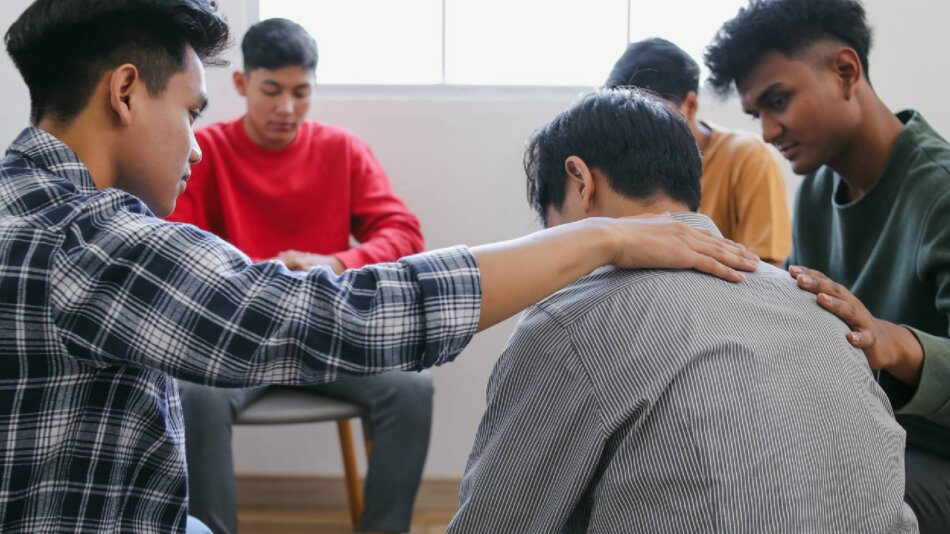
This is why the three-to-five-day pattern shows up reliably in many cases. A child braced for judgment may slowly realize no one is judging them. A child expecting to be treated like a problem may discover they are being treated like a person. The arms may uncross. They may start showing up to group. They may say something real in individual therapy. It does not mean the work is done, but it may mean the door is open, and that is often one of the hardest parts.
Questions families ask before they call
How do I know if my child needs residential treatment or outpatient care?
The decision is based on clinical need, safety, the stability of your home environment, and the severity of any co-occurring conditions, guided by the ASAM Criteria, not by cost or convenience. Residential offers 24/7 observation for a child in crisis, while PHP and IOP are step-down options as your child stabilizes.
What happens if my child refuses to engage in treatment?
Resistance at the start is normal and expected. Many children who arrive saying they are only there because they were forced shift their attitude within three to five days, once they experience care that treats them as a whole person rather than a problem to be fixed.
Does insurance cover residential addiction treatment in Southern California?
Centered Health accepts Anthem, Blue Cross Blue Shield, Aetna, United Healthcare, Tricare, and Magellan Health. The team verifies your exact benefits with a live agent before admission and advocates with carriers to authorize 45 to 90 days of residential care based on clinical necessity.
Can you treat substance use and depression or anxiety at the same time?
Yes. Integrated treatment that addresses co-occurring conditions, including depression, anxiety, trauma, OCD, eating disorders, and PTSD, alongside substance use is an essential component of comprehensive care. Treating only the substance while ignoring what may be driving it can be less effective.
What if traditional therapy hasn’t worked for my child?
A history of therapy that did not land is information, not a dead end. Centered Health uses innovative approaches, including improv, movement, and connection-based work, alongside evidence-based care when conventional modalities have not reached someone, all tailored to the individual.
How do I start the admissions process in Culver City, CA?
Call the admissions team for a listening conversation, not a sales pitch. They verify your insurance benefits in real time, give you transparent out-of-pocket numbers before you decide anything, and help determine the right level of care for your child.
Call Centered Health’s admissions team in Culver City, CA for a confidential conversation about your child’s substance use and co-occurring mental health needs, and get your exact insurance benefits verified before you make any decisions. When you are comparing addiction treatment in Southern California, remember the smallest signal you can trust: a team that stays on the line, asks what your child is running from, and treats resistance as the beginning rather than the end. You do not have to have the right words ready. You just have to make the call, and someone will listen.
Take the First Step Toward Whole-Person Recovery
If you or someone you care about is ready to explore addiction treatment that honors your unique circumstances and addresses underlying factors, not just symptoms, the team at Centered Health in Culver City is here to listen. Reaching out can feel uncertain, but a conversation about personalized, evidence-based care is a meaningful place to begin.
- Individual responses vary, and some young people may take longer to engage.
- Coverage varies by plan and individual circumstances.
- Individual results vary.
- Each person responds differently to various therapeutic approaches.
- Individual results vary, and recovery is a deeply personal process that differs for each person.
- Treatment length and outcomes vary significantly based on individual circumstances and needs.
- Each person’s response to therapeutic approaches varies, and what works for one individual may not work for another.