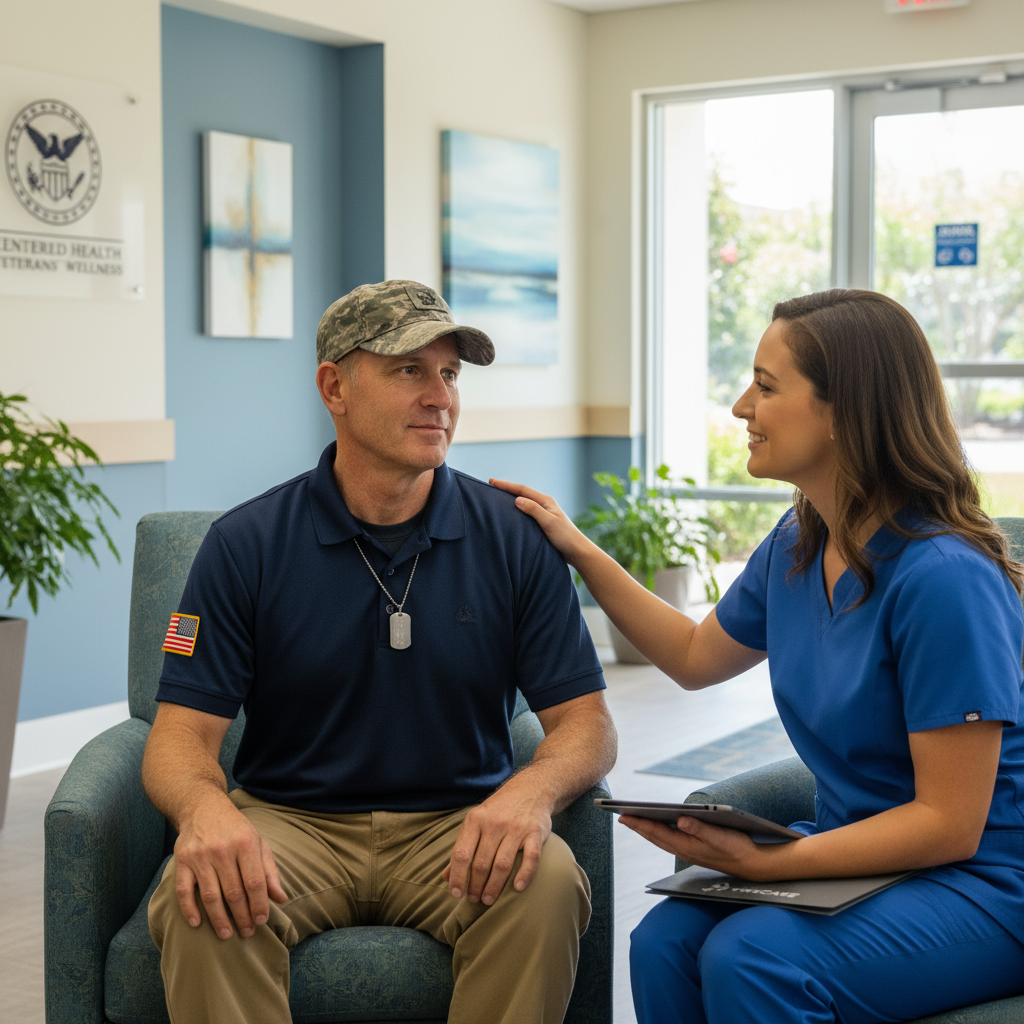
Why military substance abuse rehab with TRICARE matters
If you are an active duty service member, veteran, or military family member struggling with alcohol or drug use, finding a military substance abuse rehab TRICARE will cover can feel overwhelming. You may worry about your career, your security clearance, or what your unit or family will think if you ask for help. At the same time, you know that trying to manage this on your own is taking a toll on your health, your relationships, and your future.
TRICARE is designed to help you access effective, confidential substance use disorder (SUD) treatment so you can heal and continue to serve, transition, or retire with stability. TRICARE covers a range of addiction treatment services that combine medication, therapy, and ongoing support tailored to your individual needs, with the goal of sustained recovery and preventing further drug misuse [1].
Understanding how TRICARE works with military-focused rehab, and how a program like Centered Health supports you clinically and emotionally, can help you move from hesitation to action.
How substance use affects service members and veterans
Military culture expects you to keep going, no matter what you have seen, done, or endured. That expectation can make you more vulnerable to using alcohol or drugs to manage what feels unmanageable.
The impact of service and trauma
You may be dealing with:
- Exposure to combat, injury, or death
- Repeated high-stress deployments or training cycles
- Physical pain from service-related injuries
- Moral injury or survivor guilt
- Difficult transitions between deployment and home life
The Department of Defense has documented ongoing concerns about substance use among active duty personnel, noting that alcohol and drug misuse remain significant health challenges that require effective treatment systems and protocols [1]. When trauma and stress go untreated, substances can become a quick way to numb emotional pain, reduce anxiety, or sleep. Over time, this can turn into dependence or addiction.
Why you might delay getting help
You might recognize some of these barriers:
- Fear that seeking treatment will affect your career or clearance
- Concern that your chain of command will be involved in your care
- Belief that you should be able to handle it on your own
- Worry that treatment will not be confidential
- Uncertainty about what TRICARE actually covers
Research on military SUD care has identified these as real, documented barriers. Policies that tie treatment to disciplinary processes and mandatory commander involvement, along with a lack of confidential early intervention models, often keep service members away from treatment even when they could benefit from it [2].
Understanding your treatment options and your TRICARE benefits can help you move past these obstacles and toward recovery.
What TRICARE covers for substance abuse treatment
TRICARE approaches addiction as a complex but treatable health condition. Treatment is tailored to your needs and typically combines counseling, medications when appropriate, and continuous clinical assessment, consistent with evidence-based principles for drug misuse treatment [1].
Levels of care you can access
Depending on your situation, TRICARE may cover:
- Medically supervised detoxification
- Residential or inpatient rehab
- Partial hospitalization programs (day treatment)
- Intensive outpatient programs
- Standard outpatient therapy and medication management
- Ongoing recovery and relapse prevention services
Medically assisted detox is covered, but it is only the first step. TRICARE emphasizes that detox alone is not treatment. Long-term recovery requires ongoing therapy and structured support, which can be voluntary or, in some military settings, mandated with certain incentives or sanctions to encourage treatment completion [1].
If you are looking for a more detailed overview of benefits, you can explore a dedicated TRICARE covered addiction treatment center explanation to see how coverage works in practice.
Monitoring and medical care during treatment
Comprehensive SUD programs supported by TRICARE typically include:
- Regular drug and alcohol testing to support accountability
- Screening and testing for infectious diseases like HIV, hepatitis B and C, and tuberculosis
- Ongoing medical monitoring of withdrawal symptoms, medications, and co-occurring conditions
Continuous drug use monitoring and infectious disease testing are standard in military-focused substance abuse programs to protect your health and prevent the spread of infections during recovery [1].
If you are specifically concerned about alcohol use, a focused TRICARE alcohol rehab program can help you understand what alcohol detox and rehab look like and how TRICARE West supports that care.
The military SUD care system and where you fit
Your path to treatment can vary depending on your status and branch of service. The Department of Defense SUD care system includes:
- Direct care at military treatment facilities
- Services through the Veterans Health Administration
- Purchased care through TRICARE in civilian programs
This system is designed to serve active duty personnel, dependents, National Guard and Reserve members, although exact processes differ among branches [2].
How branches have addressed substance use
To understand the scale of care, it helps to look at how the services have responded:
- The Army’s Substance Abuse Programs (ASAP) operated dozens of outpatient sites and one inpatient unit, with more than 14,000 active duty Soldiers enrolled in 2010. About 75 percent of referrals were alcohol related, while opioid referrals rose more than 300 percent between 2006 and 2010 [2].
- The Air Force’s Alcohol and Drug Abuse Prevention and Treatment (ADAPT) programs received thousands of referrals in fiscal year 2010 but enrolled a smaller subset into formal treatment, which suggests that many members were identified but did not ultimately engage in care [2].
- The Navy’s Substance Abuse Rehabilitation Programs (SARPs) included outpatient and inpatient sites, treating thousands of Navy and Marine Corps personnel, mostly for alcohol use disorders [2].
This system demonstrates that you are not alone. Many service members have needed and received care. You can be one of them, and you can do it using your TRICARE West benefits in a setting that understands military culture.
If you want a civilian option that still aligns with military needs, a military rehab that accepts TRICARE West can offer that bridge.
The link between trauma, PTSD, and substance use
For many veterans and active duty members, substance use is closely tied to trauma or chronic stress.
Why trauma and addiction often show up together
You might notice that alcohol or drugs help you:
- Temporarily quiet intrusive memories or nightmares
- Feel less on edge in crowds or at home
- Fall asleep more quickly
- Numb emotional pain from grief, loss, or guilt
Over time, your brain starts to rely on substances to regulate your mood. What began as “just to take the edge off” can develop into a substance use disorder, especially when it is combined with symptoms of PTSD, depression, or anxiety.
The National Institute on Drug Abuse, whose treatment principles guide many military SUD programs, emphasizes that effective treatment must be individualized, accessible, and comprehensive. It should address not only drug use but also related mental health conditions and medical issues, using counseling, medication, and continuous assessment tailored to the person’s needs [1].
Why integrated treatment matters for you
When trauma and addiction are treated separately, you can end up feeling like you are constantly putting out fires. Integrated programs:
- Screen and treat PTSD, depression, and anxiety alongside addiction
- Teach coping skills so you do not have to rely on substances to manage triggers
- Involve evidence-based therapies such as cognitive behavioral therapy (CBT), prolonged exposure, or EMDR where appropriate
- Create a treatment plan that respects your service history and the reality of your life now
If you are specifically looking for veteran-focused help, a veteran addiction rehab TRICARE West program can explain how integrated trauma and addiction treatment works for former service members.
Evidence-based addiction treatment you can expect
In a TRICARE supported program, you are not just getting generic counseling. You are engaging in structured, research-backed care that has been shown to help people recover from substance use disorders, including those with a military background.
Therapies and approaches commonly used
You are likely to encounter:
- Cognitive behavioral therapy (CBT) to identify and change unhelpful thought patterns and behaviors linked to your substance use
- Motivational interviewing to help you resolve ambivalence about change and strengthen your own reasons for recovery
- Group therapy to connect you with others who understand the pressures of service and transition
- Family or couples counseling when relationships have been strained by addiction
- Medication-assisted treatment (when appropriate for alcohol or opioid use) to reduce cravings, prevent relapse, and stabilize your brain chemistry
TRICARE’s model aligns with NIDA’s 13 principles of effective treatment, which emphasize individualized care, the use of medications and counseling together when indicated, and ongoing adjustment of care based on your response [1].
Medical monitoring and safety
In a TRICARE detox and rehab program, you can expect:
- A medical evaluation before detox
- Ongoing monitoring of vital signs and withdrawal symptoms
- Appropriate use of medications to keep you safe and as comfortable as possible
- A clear plan to move from detox into active treatment so you do not stop at the first step
If your primary concern is drug use rather than alcohol, a focused drug rehab that accepts TRICARE West or drug addiction treatment TRICARE West program can show you how medical and therapeutic support work together during withdrawal and early recovery.
How TRICARE West coverage works for addiction treatment
TRICARE West is your regional TRICARE contractor if you live in the Western United States. Understanding what is covered can help you plan your next steps with more confidence.
Core services typically covered
Coverage varies by plan type and clinical need, but you may have benefits for:
- Inpatient and residential rehab at a TRICARE approved drug rehab center
- Partial hospitalization or intensive outpatient programs in a TRICARE West addiction recovery center
- Individual, group, and family therapy within a TRICARE covered substance abuse program
- Medication assisted treatment when medically indicated
- Medically supervised detox as part of a TRICARE detox and rehab program
To see how these provisions apply to your situation, you can also look at substance abuse treatment TRICARE West for a more detailed breakdown of options.
Alcohol and drug specific coverage
If alcohol is your main concern, programs such as:
can explain how detox, residential, or outpatient alcohol treatment are billed and authorized.
If you are looking at drug focused care, resources like:
- Veteran drug rehab TRICARE insurance
- Addiction treatment that accepts TRICARE West
- Military addiction treatment TRICARE
can help you understand your options in more detail and choose the setting that fits your level of use and your responsibilities at home or in your unit.
Why veterans choose a TRICARE-covered program like Centered Health
You have unique needs as a veteran or active duty service member. A program that accepts TRICARE West and understands military culture can make a significant difference in your recovery experience.
A treatment environment that respects your service
In a veteran-informed setting, you are not required to explain basic military realities. Clinicians understand:
- Rank structure and the chain of command
- Deployment stressors, reintegration challenges, and the impact on families
- The stigma that can come with acknowledging mental health or substance use issues
- The need to balance treatment plans with possible career, VA, or benefits considerations
This familiarity allows you to spend your energy on healing rather than repeatedly explaining your background.
Through veterans addiction therapy TRICARE, you can access trauma-aware, evidence-based care that directly addresses your experiences in uniform and your transition to civilian life.
Integrated, individualized care
Programs like Centered Health use a comprehensive approach. Your plan may include:
- Medical detox when needed
- Intensive therapy focused on both addiction and co-occurring mental health conditions
- Holistic supports such as mindfulness, physical wellness, and stress management
- Relapse prevention planning tailored to your triggers and environment
- Coordination with your existing providers or VA resources
A TRICARE addiction recovery program is structured to support you through each phase of healing, from the moment you reach out for help through aftercare and continued support.
When you combine this with the financial and structural support of a TRICARE covered addiction treatment center, you give yourself the best chance to stabilize and rebuild.
Taking your next step with TRICARE West
You do not need to wait until you hit a crisis point to ask for help. If you recognize that substance use is getting in the way of the life you want, you can start taking practical steps now.
How to move forward
You can:
- Contact your TRICARE West regional contractor to verify your specific SUD benefits and any referral requirements.
- Reach out to a TRICARE West addiction recovery center or military rehab that accepts TRICARE West to discuss your situation in detail.
- Ask about levels of care, length of stay, and how they coordinate with your command or VA if relevant to your status.
- Discuss confidentiality, documentation, and how your information is handled so you understand what to expect.
- Work with admissions staff to schedule an assessment and begin your treatment plan.
If you are already in contact with a behavioral health provider through the military or VA, you can also ask them how to connect with a substance abuse therapy TRICARE West provider for more intensive or specialized care.
Recovery is not about erasing your past. It is about giving yourself the tools, support, and stability you need to move forward. With military substance abuse rehab TRICARE coverage, you have access to structured, evidence-based treatment that recognizes the realities of service and the strength it takes to ask for help.
You can choose to continue carrying this burden alone, or you can use the benefits you have earned to get the care you deserve.