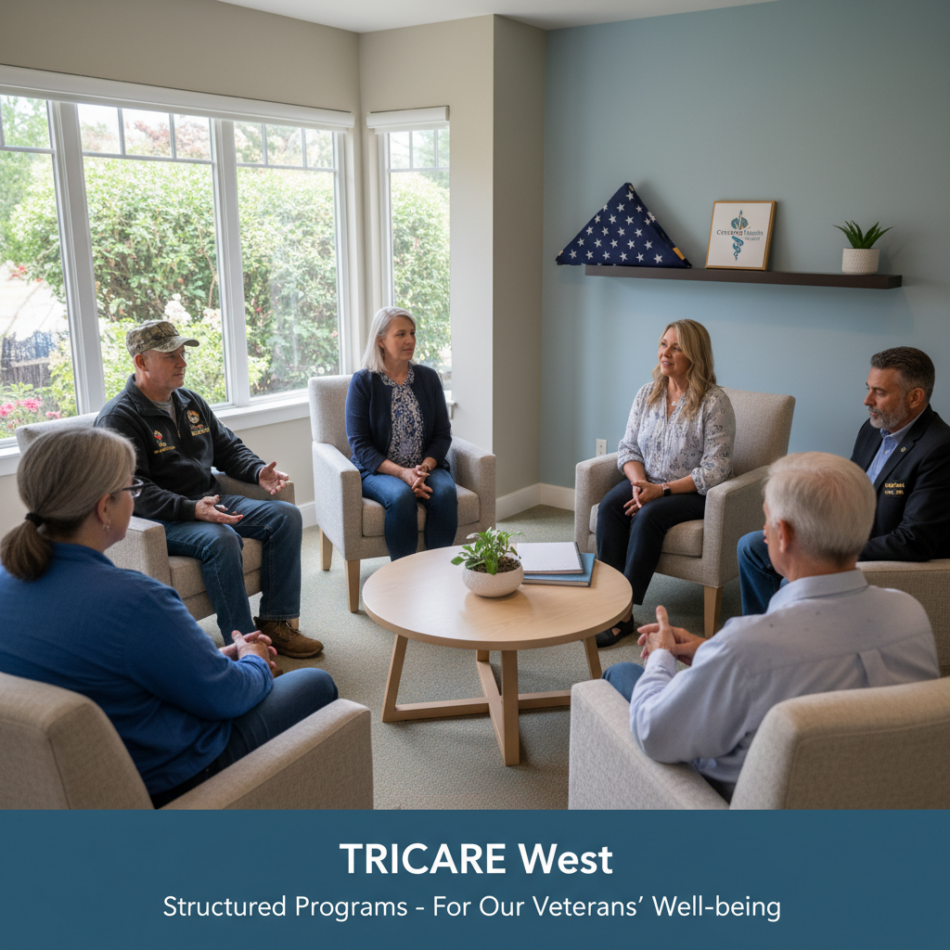
Understanding a TRICARE anxiety treatment center
If you are living with anxiety related to military service, family stress, or life transitions, finding a TRICARE anxiety treatment center that actually fits your needs can feel overwhelming. You know you want experienced clinicians, trauma‑informed care, and a program that respects military culture. You also need to understand what your TRICARE West or TriWest plan will cover so that treatment is realistic for you and your family.
A TRICARE‑approved program can provide structured support for anxiety, depression, PTSD, and related concerns for active‑duty service members, veterans, and dependents. TRICARE insurance includes benefits for mental health and addiction treatment, with coverage for inpatient and outpatient levels of care, counseling, and medication‑assisted options when needed [1]. When you choose the right center, you gain more than symptom relief. You create space for healing, skill building, and long‑term change.
How TRICARE supports anxiety and mental health treatment
TRICARE is designed to help you access clinically appropriate care without carrying the full financial burden on your own. If you are considering a TRICARE mental health treatment center, it helps to have a clear picture of what your benefit can include.
TRICARE typically offers coverage for:
- Inpatient psychiatric hospitalization for acute crises
- Residential or inpatient treatment programs when you need 24/7 structure
- Partial hospitalization programs (PHP) and intensive outpatient programs (IOP)
- Individual, group, and family counseling as part of mental health therapy covered by tricare
- Medication management for anxiety, depression, and related conditions
- Treatment for co‑occurring substance use disorders and mental health concerns [1]
For many, anxiety does not appear alone. It may be part of PTSD, depression, or a service‑related trauma history. TRICARE insurance plans generally cover integrated treatment for co‑occurring conditions, which allows you to work on anxiety, mood, and trauma in a coordinated way rather than piecing care together on your own [1].
If you are unsure where to begin, a mental health clinic that accepts tricare west can review your benefits with you, explain prior authorization requirements, and help you understand what your plan will realistically cover.
Why a TRICARE‑approved facility matters
Choosing a TRICARE approved mental health facility is about more than checking an insurance box. It is about working with a team that understands how to align clinical care with TRICARE rules so that you receive appropriate support with fewer billing and authorization surprises.
TRICARE plans may cover both in‑network and out‑of‑network services, but coverage is usually stronger when you stay in network. Out‑of‑network options often involve higher out‑of‑pocket costs and additional paperwork. In some situations, you or your provider can request a single case agreement for services that are not typically covered if they are clearly medically necessary [1].
When you choose a program that has experience with behavioral health treatment tricare west, you benefit from:
- Staff who know TRICARE West and TriWest requirements
- Support with authorizations and referrals
- More predictable costs and fewer coverage gaps
- Coordinated communication with military or VA providers as appropriate
TRICARE is more likely to cover care that is clearly documented as medically necessary, evidence‑based, and delivered at the right level of intensity. A seasoned tricare west psychiatric treatment center understands how to match you with the appropriate program and demonstrate that need in your treatment plan and records.
Levels of care for anxiety under TRICARE
An effective TRICARE anxiety treatment center will offer, or coordinate, multiple levels of care so that your treatment can adjust as your needs change. The right level of care depends on symptom severity, safety concerns, and how much structure you need day to day.
Inpatient and residential care
If you are in crisis, cannot function safely at home, or are living with severe anxiety, panic, or co‑occurring conditions, a higher level of care may be appropriate. TRICARE typically covers medically supervised inpatient or residential programs that provide 24‑hour support and monitoring [1].
A tricare mental health residential program can be appropriate when you:
- Feel unsafe or are at risk of self‑harm
- Cannot manage basic responsibilities because of anxiety or PTSD
- Have tried outpatient therapy without enough improvement
- Are also navigating substance use, sleep problems, or chronic pain that worsens your symptoms
In these settings, you receive daily individual and group therapy, medication management, and support around sleep, nutrition, and daily structure. Residential care allows you to step out of daily triggers so that you can focus fully on stabilization and recovery.
Partial hospitalization and intensive outpatient
If you need more than weekly therapy but do not require 24‑hour care, partial hospitalization (PHP) and intensive outpatient programs (IOP) bridge the gap. A tricare west behavioral health program at this level typically includes several hours of treatment per day, multiple days per week.
These programs can be especially helpful if you:
- Are transitioning out of inpatient or residential care
- Need structured support while maintaining some daily responsibilities
- Want to work intensively on anxiety, trauma, or depression with a consistent group
A tricare west therapy program will usually combine group therapy, skills training, individual sessions, and psychiatry visits. You return home in the evenings, which allows you to practice new coping strategies in your real environment while still having strong support around you.
Outpatient and ongoing therapy
For many, long‑term progress happens in outpatient care. Weekly or biweekly sessions give you consistent space to process experiences, build coping skills, and adjust medications as needed. This may be the starting point if your anxiety is moderate and you are not in crisis, or it may be the step‑down phase after higher levels of care.
A mental health rehab that accepts tricare will often support you across this full continuum, from intensive treatment to ongoing outpatient therapy. That continuity allows your care team to know your history and tailor your plan as your symptoms change.
Trauma‑informed, veteran‑focused anxiety care
Military service can expose you to experiences most civilians never encounter. Combat, deployments, moral injuries, chronic stress, and time away from family can all contribute to anxiety and trauma symptoms. A general mental health program may not fully understand these layers. Choosing a veteran mental health program tricare insurance option allows you to work with clinicians who recognize these realities from the start.
Trauma‑informed, veteran‑focused care usually includes:
- Clinicians trained in PTSD, moral injury, and combat stress
- Sensitivity to military culture, values, and chain of command experiences
- Awareness of how hypervigilance, insomnia, and irritability show up after service
- Respectful approaches to topics like guilt, loss, and identity after leaving the military
TRICARE insurance plans generally cover co‑occurring disorder treatment, which is critical when anxiety is intertwined with PTSD, depression, or substance use [1]. A strong tricare mental health program veterans option will weave these threads together into one integrated plan rather than treating each condition in isolation.
Confidentiality is a common concern, especially for active‑duty members. A trustworthy tricare west mental health program will explain clearly what can be shared, with whom, and under what circumstances, so you can make informed decisions and feel safe being honest in treatment.
Evidence‑based therapies for anxiety and related conditions
The right TRICARE anxiety treatment center will not rely on guesswork. It will offer structured, evidence‑based approaches that have been shown to help with anxiety, PTSD, depression, and related conditions.
Common therapies you may encounter include:
- Cognitive Behavioral Therapy (CBT) to identify and change anxious thought patterns
- Exposure‑based therapies to gradually reduce avoidance and fear
- Trauma‑focused therapies for service‑related memories and triggers
- Dialectical Behavior Therapy (DBT) skills for emotion regulation and distress tolerance
- Mindfulness‑based strategies to calm the nervous system and improve focus
Many TRICARE plans also cover medication management and, when needed, Medication‑Assisted Treatment (MAT) as part of addiction treatment, including medications like buprenorphine or methadone [1]. If you are dealing with both anxiety and substance use, you can receive integrated support that addresses both sides of the struggle.
A program that specializes in tricare covered depression treatment program options will also be familiar with how anxiety and depression often appear together. Your plan should reflect that connection, not treat them as separate issues.
What makes a center the right fit for you
Not every TRICARE‑covered program will feel right to you, even if it looks good on paper. As you compare options, it helps to focus on how each center aligns with your history, goals, and comfort level.
Key questions to consider include:
- Does the program have specific experience with veterans, active‑duty members, and military families
- Are clinicians trained in trauma and anxiety treatment, not just general counseling
- What levels of care are available if your needs change during treatment
- How will they help you understand and use your tricare covered mental health treatment benefits
- What does a typical day look like at each level of care
- How do they include family or support people when appropriate
The right behavioral health program for veterans tricare will combine clinical quality with an environment where you feel respected and understood. That sense of fit often shows up in small details, such as how staff speak to you during the intake call, how clearly they answer your questions, and whether they acknowledge your service without making assumptions.
When a center takes time to understand your story, your service, and your goals, treatment becomes a collaborative process rather than something that is simply done to you.
How Centered Health supports TRICARE West and TriWest members
When you are searching for mental health treatment that accepts tricare west, you are looking for more than a place to stay. You want a team that will walk you through each stage, from the first phone call to your transition back home.
A veteran‑focused program like Centered Health can support you by:
- Verifying and explaining your TRICARE West or TriWest benefits in clear language
- Helping you access a suitable tricare covered psychiatric treatment program or anxiety track
- Providing comprehensive assessments that consider your military history, current symptoms, and family context
- Creating individualized treatment plans that align with TRICARE requirements and your personal goals
- Coordinating medication management and, when needed, MAT for co‑occurring substance use [1]
- Supporting aftercare planning so that you leave with concrete next steps and providers in place
If you need a structured setting, a tricare mental health residential program within a TRICARE‑approved facility allows you to focus fully on recovery. If outpatient care is more appropriate, a mental health treatment that accepts tricare west can provide consistent therapy, psychiatry, and skills groups while you remain at home.
Getting started with a TRICARE anxiety treatment center
Taking the first step can feel difficult, especially if you are used to handling things on your own. Reaching out for help does not erase your strength or independence. It gives you additional tools to carry the load you have been managing for a long time.
To move forward, you can:
- Contact a tricare mental health treatment center that works with TRICARE West or TriWest and request a benefits review.
- Share openly about your anxiety, service history, and any previous treatment so the team can recommend an appropriate level of care.
- Ask specifically how your plan handles in‑network and out‑of‑network care, co‑pays, and authorizations [1].
- Discuss your short‑term and long‑term goals so your plan focuses on what matters most to you.
Whether you need intensive support through a veteran mental health treatment tricare option or ongoing outpatient care through a mental health clinic that accepts tricare west, you do not have to navigate this alone. TRICARE benefits exist so that you can access the care you have earned through your service.
When you choose a TRICARE anxiety treatment center that understands military life, trauma, and the realities of living with anxiety, you give yourself an opportunity to feel more grounded, more connected, and more in control of your next chapter.