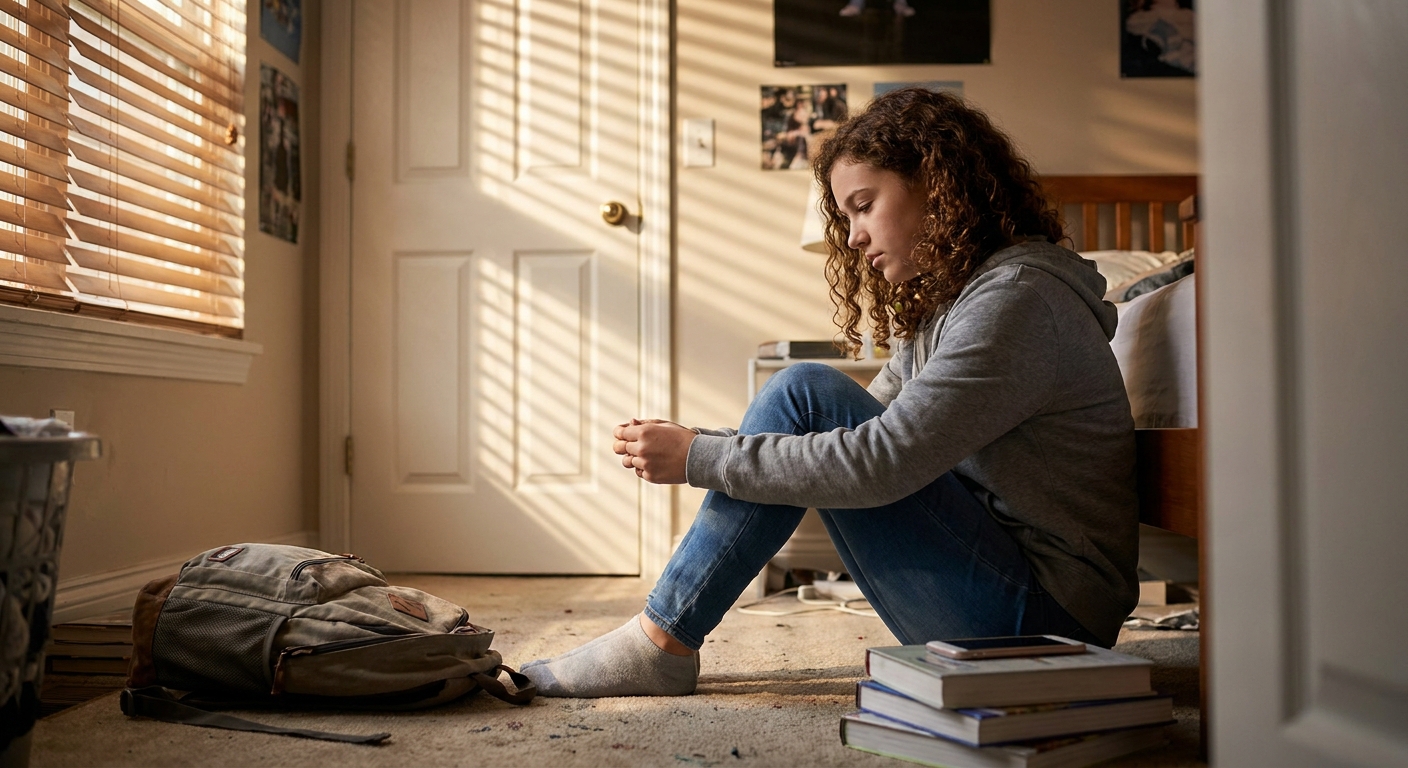
You might be holding two pictures of your child right now. One is the kid who used to talk the whole drive home from school. The other is the teenager who answers in one word, sleeps through the afternoon, and keeps the bedroom door shut. When those two pictures stop matching, it makes sense to look for a pattern and ask Centered Health at what age does depression peak, as if the answer could show you a date you missed on the calendar. You did not miss a date. Depression does not wait for a certain birthday, and the age it hits hardest depends on biology, gender, stress, and whatever else your teen is quietly carrying.
The data does point to one clear thing. A CDC National Center for Health Statistics report on depression prevalence found that depression was more common among adolescents ages 12 to 19 than among older age groups, and more common in females than in males. For parents, that means the teen years are the center of the picture.
This guide covers how depression shows up at different ages, why girls and boys often look different when they struggle, when to stop waiting and get an assessment, how insurance coverage works, and how families in Culver City can find appropriate care, from outpatient support close to home to Centered Health’s adolescent residential facility in Malibu.
If your teen is in danger right now: If your teen has talked about wanting to die, has hurt themselves, or you are afraid they might, call or text 988 to reach the 988 Suicide & Crisis Lifeline. It is available 24 hours a day and supported by SAMHSA. You can also call 911 or go to the nearest emergency room. Do not wait for a callback or an appointment.
At What Age Does Depression Peak, and Why Is There No Single Answer?
Depression does not peak at one single age. Current U.S. data shows the highest rates in the teen years, with real risk continuing into the early twenties. Depression can also start at any point in adult life.
The World Health Organization describes depression as a common mental health condition that can affect anyone. It is different from the normal ups and downs of everyday life. That framing matters for you as a parent, because it moves the question away from “Is my teen at the right age for this?” and toward “Is what I am seeing more than a rough week?”
What changes from one age to the next is how depression looks. In early adolescence, around ages 12 to 14, it often shows up as irritability, snapping at family, pulling away from friends, or losing interest in things that used to matter. Many younger teens do not have the words for sadness, so it comes out as anger or as silence. In the late teens and early twenties, depression often ties into big transitions: graduating, leaving home, figuring out who they are, and feeling behind everyone else. Later in life, adults more often describe deep fatigue, low motivation, and a loss of purpose.
Picture a 13-year-old who used to love soccer and now says it is “stupid,” slams doors, and stays in their room after dinner. It is easy to call that attitude. It may be attitude. But if it lasts and spreads into school, sleep, and friendships, it may be depression wearing an angry face. Centered Health treats depression across four levels of care: outpatient (OP) and aftercare, intensive outpatient (IOP), partial hospitalization (PHP), and residential treatment. The appropriate response depends on how your teen is doing today, not on their birth year.
Why Does Depression Hit Teenage Girls Harder, and Often Earlier?
Starting around puberty, girls become more likely than boys to experience depression, and the gap tends to open in the early to middle teen years. Both the CDC and the WHO report higher rates of depression in females than in males.
Researchers point to a mix of reasons. Girls often enter puberty earlier than boys, and the hormonal shifts of puberty can affect mood and sleep. At the same time, social pressure tends to climb fast in middle school and early high school. Friend groups shift, comparison becomes constant, and body image concerns often start to grow. When those pressures land on a brain that is still developing, a girl can go from struggling to sinking without anyone around her noticing right away.
What makes this hard for you is that girls often turn their pain inward. A 14-year-old girl might keep her grades up, show up to practice, and say she is “fine,” while privately feeling worthless, criticizing everything about herself, skipping meals, or lying awake for hours. From the outside, it can look like normal teen moodiness. On the inside, it can feel unbearable.
Boys are not spared, and their depression is easy to misread. Boys more often show irritability, anger, risk-taking, or disappearing into gaming or substance use. Adults may treat that as a behavior problem and respond with consequences, while the depression underneath goes untreated.
Eating disorders often occur alongside depression, especially in teen girls. That is why Centered Health treats eating disorders together with depression rather than as separate problems handled by separate teams. If your daughter’s mood changes come with new rules around food, weight, or exercise, mention both when you reach out.
Your Teen’s Age Matters Less Than How Long This Has Lasted
Asking “At what age does depression peak?” is a natural place to start, but it is not the most useful question. The better question is how long the changes have lasted and how much they get in the way of daily life. When low mood or lost interest lasts two weeks or longer and affects school, friendships, sleep, or self-care, it is time for a professional assessment, whether your teen is 13 or 17.
That two-week line is not random. The DSM-5, the manual clinicians use to diagnose mental health conditions, uses a two-week period of symptoms as part of its criteria for major depression, and the National Institute of Mental Health describes the same timeframe. Here are signs of depression in teenage girls and boys worth taking seriously:
- Sadness, emptiness, or hopelessness that lasts most of the day, most days
- Irritability or anger that seems out of proportion, which is common in teens
- Losing interest in friends, sports, music, or hobbies they used to love
- Sleeping much more or much less than usual
- Big changes in appetite or weight
- Falling grades, missed assignments, or skipping school
- Constant tiredness, or moving and talking more slowly
- Harsh self-criticism or statements like “I’m a burden”
- Talking about death, not wanting to wake up, or not wanting to be alive
- More common in girls: turning inward, crying spells, guilt, body image distress, changes in eating, self-harm such as cutting
- More common in boys: anger, aggression, reckless behavior, withdrawing into screens, drinking or drug use
When a family reaches out to Centered Health, the recommendation is shaped by three things: how severe the symptoms are, whether there is a safety risk, and how well your teen is functioning day to day. Those are the same factors insurance carriers look at when deciding clinical necessity. That is why Centered Health’s utilization review team focuses on them from the very first conversation.
Many parents quietly wonder whether a teenager can go to a mental hospital or residential treatment. Yes, a 15-year-old can receive inpatient or residential mental health care, with a parent or guardian involved in the decision. Residential treatment is usually recommended when a teen’s safety is at risk, when symptoms are too severe to manage while living at home, or when outpatient care has not provided sufficient support. Centered Health’s adolescent residential facility in Malibu includes 24/7 observation, so someone is always there. If your teen is in immediate danger, an emergency room or 988 comes first, and a residential program can follow once they are stable.
Is It Only Depression, or Is Something Else Riding Along With It?
Often, depression in teens does not arrive alone. Anxiety, trauma, OCD, eating disorders, and substance use frequently show up with it, and when those go unaddressed, depression can last longer and return more easily.
Co-occurring conditions can also change the timeline you think you are looking at. A teen with anxiety may start avoiding school at 12, fall behind, lose friends, and slide into depression by 14. A teen who lived through something frightening may seem fine for a while, then struggle with nightmares, anger, and low mood months later. A teen who cannot sleep may start vaping or drinking to calm down, and the substance use deepens the depression it was meant to quiet. In each case, addressing only the sadness misses the engine driving it.
This is why Centered Health treats depression alongside anxiety, trauma, PTSD, OCD, eating disorders, suicidal ideation, and substance use disorders within one care team. Your teen does not get shuffled between a “mood person” and an “addiction person” who never talk. Individual therapy, group therapy, family therapy, and multifamily therapy are coordinated, so each provider knows what the others are working on.
For you, that means fewer handoffs and fewer times you have to retell the hardest parts of your family’s story. If your teen’s depression comes with drinking, drug use, or vaping, you can read more about Centered Health’s approach to treatment for teen depression and substance use. When you call, share everything you have noticed, even the parts that feel embarrassing. The full picture makes personalized evidence-based care possible.
“It’s Just a Phase” Feels Safer Than It Really Is
Normal teen moodiness comes and goes within days. Depression sticks around and spreads into school, friendships, sleep, and family life, and waiting rarely makes it smaller.
If you have been waiting, you are not a bad parent. You may be afraid of overreacting. You may be afraid that pushing will make your teen shut you out even more. You may have tried therapy before and watched it fizzle, or tried a program where nobody called you back and nobody seemed to know your kid’s name. You may be scared of choosing a place that isn’t right for your family. And underneath all of that, you may be asking yourself whether this is somehow your fault. Those fears are real, and they are exactly what keeps loving parents stuck. Depression is a health condition, not a verdict on your parenting.
So what are some common approaches to treating adolescent depression? For many teens, treatment includes talk therapy matched to how severe the symptoms are, with the family involved, and for moderate to severe depression it may also include carefully monitored medication alongside therapy. Cognitive behavioral therapy (CBT) helps teens notice and challenge the harsh thoughts that feed depression. Dialectical behavior therapy (DBT) teaches skills for handling intense emotions and urges to self-harm. Family therapy works on the patterns at home that make it harder or easier for everyone to cope. When medication is considered, the WHO notes that antidepressants are not the first line of treatment for adolescents and should be used with extra caution. That is why close monitoring by a prescriber matters as much as the prescription itself.
If you are not sure how to help your teen, these steps can get you started:
- Start with a calm, private conversation. Describe what you have noticed (“You have been skipping dinner and staying in your room”) instead of naming a diagnosis.
- Listen more than you fix. Your teen may test you with small things first. Staying calm earns you the bigger conversation.
- Ask directly about safety. Ask, “Have you had thoughts of hurting yourself or not wanting to be alive?” Asking clearly is protective, and many clinicians encourage parents to do it.
- Write down what you are seeing. Note when changes started, what has changed, and anything your teen has said about death or self-harm.
- Get a professional assessment. Talk with your pediatrician or call a behavioral health provider who can recommend appropriate care.
- Have your insurance card ready. Knowing your carrier and plan speeds up the conversation about coverage.
- Take the blame off your own shoulders. Your teen needs you steady, not guilty. Getting support for yourself is part of helping them.
Centered Health’s outpatient therapy for Culver City families exists so you can act early, before a crisis forces the decision. Starting at a lighter level of care lets your teen keep living at home and going to school while building skills. If more support is needed, they can step up to intensive outpatient or partial hospitalization with the same Centered Health team.
Why Doesn’t the Risk End When Your Teen Turns 18?
The short answer is that the support around young people changes faster than they do. After high school, the daily structure of school, family routines, and parental oversight drops away, and depression can return or begin for the first time.
The years from about 18 to 25 bring a pile of changes at once: college or work, moving out, new relationships, money pressure, and the feeling that everyone else has it figured out. Young adults in this stretch are also often the least likely to ask for help. They want independence, they worry about being labeled, and some lose the routines that kept them steady. The stakes are serious. The WHO reports that suicide is one of the leading causes of death among people ages 15 to 29.
There is also a practical shift parents often do not see coming. Once your child turns 18, they generally make their own health care decisions, and providers usually cannot share information with you without their permission. If your teen is 16 or 17 and in treatment now, start talking about what support will look like after their 18th birthday while you are still part of every conversation.
This is where aftercare and step-down care matter. Centered Health’s continuum moves from residential to partial hospitalization, intensive outpatient, and outpatient and aftercare, so treatment does not just stop on discharge day. A teen finishing a higher level of care can keep working with a team that already knows their history as they head into senior year, college, or a first job. Imagine your 17-year-old finishing a program in spring and starting college in fall. A plan for ongoing outpatient support, built before they leave, can make the difference between a rough first semester and a fall back into old patterns.
What Happens When You Call Centered Health in Culver City?
When you call, you talk with a real person, share what you are seeing, and get help figuring out which level of care fits your teen. The Centered Health team then works with your insurance carrier through utilization review and insurance advocacy, so you are not left to sort out coverage alone.
Centered Health is based in Culver City, CA, and operates an adolescent residential facility in Malibu. Because Centered Health offers the full continuum, your teen can start at one level and move up or down as needs change, without switching providers or starting over. The types of depression treatment available for teens include:
- Outpatient (OP) and aftercare: Regular therapy sessions while your teen lives at home and attends school.
- Intensive outpatient (IOP): Several sessions a week, with more structure than outpatient, while your teen still sleeps at home.
- Partial hospitalization (PHP): A full day of treatment on most weekdays, then home in the evening.
- Residential: Structured, around-the-clock care with 24/7 observation at the Centered Health Malibu adolescent residential facility, for teens who may benefit from more support than home can provide.
Within each level at Centered Health, care is built from individual therapy, group therapy, family therapy, and multifamily therapy. Here is how an adolescent depression treatment program works in practice. An assessment shapes a treatment plan, your teen attends a schedule of therapies matched to that plan, and the team reviews progress regularly so the level of care can be adjusted up or down. You are not on the sidelines. Family therapy gives you a place to work on what happens at home, and multifamily therapy lets you sit with other parents who understand exactly what you are carrying. Centered Health pairs that personalized evidence-based care with a full range of individual and group therapy options and serene Southern California treatment environments, because teens tend to engage more when they feel safe and respected.
You may be worried your teen will refuse to go or quit after a few days. Many teens start out resistant, and that is expected. Working with a reluctant teen is part of the clinical work, not a sign that the plan has failed. You may also be wondering how this place is any different from the ones you have already tried. The practical answer is continuity: one Centered Health team across residential, PHP, IOP, and outpatient care, with utilization review and insurance advocacy handled in-house, so your family is not starting over every time your teen’s needs change.
Centered Health accepts Anthem, Aetna, Blue Cross Blue Shield, Magellan Health, TRICARE, and UnitedHealthcare. The insurance advocacy team helps you understand your benefits before treatment begins, so coverage questions do not stand between your teen and the care they need.
What Else Do Parents in Culver City Want to Know?
What is the most common age for depression to start in teenagers?
Depression often first appears in early to middle adolescence, around the onset of puberty, and the risk continues into the late teens and early twenties. Girls tend to show a sharper rise than boys in the early teen years. If you are asking “At what age does depression peak?” because you are worried about your own child, the timing matters less than the changes you are seeing right now.
Can a 15-year-old go to a mental hospital or residential treatment?
Yes. A 15-year-old can receive inpatient or residential mental health care with a parent or guardian involved in the decision, and it is usually recommended when safety is at risk or symptoms are difficult to manage at home. In an emergency, start with 988, 911, or the nearest emergency room. Once your teen is stable, Centered Health’s adolescent residential facility in Malibu, with 24/7 observation, can provide structured support to continue healing.
How do I know if my teen’s depression is serious enough for treatment?
If symptoms last more than two weeks, get in the way of school or friendships, or include any mention of self-harm or not wanting to be alive, your teen needs an assessment at any age. If you believe your teen is in immediate danger, call or text 988, call 911, or go to the nearest emergency room.
Does depression get worse with age if left untreated?
Untreated depression in adolescence can make future episodes more likely. It can also raise the risk of co-occurring anxiety, substance use, and problems at school or work. Getting help early gives your teen a better chance to build coping skills before patterns set in.
What is the difference between outpatient therapy and residential treatment for teen depression?
Outpatient therapy means regular sessions while your teen lives at home. Residential treatment provides 24/7 care in a structured setting when safety risk or symptom severity means outpatient care may not provide sufficient support. Intensive outpatient and partial hospitalization fall in between.
How quickly can my teen start depression treatment in Culver City?
Timing depends on your teen’s needs, the level of care recommended, and your insurance. When you call Centered Health, the team will walk you through next steps and give you a realistic picture of when treatment can begin.
Will my insurance cover teen depression treatment at Centered Health?
Centered Health accepts Anthem, Aetna, Blue Cross Blue Shield, Magellan Health, TRICARE, and UnitedHealthcare. Coverage depends on your specific plan, and the Centered Health insurance advocacy team will help you understand your benefits before treatment begins.
You Do Not Need Perfect Timing to Take the Next Step
If you are a parent in Culver City and the changes in your teen’s mood, sleep, friendships, or schoolwork have lasted more than two weeks, call Centered Health at the number on this page. You will talk with someone who listens, helps you understand which level of care may fit, and works with your insurance carrier so you are not doing this alone.
Before you call, take five minutes to write down three things: when you first noticed the change, the two or three behaviors that worry you most, and anything your teen has said about hurting themselves or not wanting to be alive. Put your insurance card next to that list. Those notes will turn a hard, emotional call into a clear conversation about what your teen needs next, and they will help the Centered Health team match your teen to appropriate care from the very first day.
Understanding Your Child’s Mental Health Starts With a Conversation
If you’ve noticed changes in your child’s mood or behavior, or if you’re wondering whether what they’re experiencing falls within the normal range of adolescent stress, you’re not alone in those concerns. Many parents in Culver City face similar questions about when and how to seek support for their children’s mental health. Centered Health offers personalized, evidence-based care designed to meet young people where they are, and a brief conversation can help you understand the next steps for your family.
Treatment outcomes vary for each individual. This article is for general education and is not a substitute for a professional evaluation, diagnosis, or treatment. If your teen is in immediate danger, call or text 988, call 911, or go to the nearest emergency room.