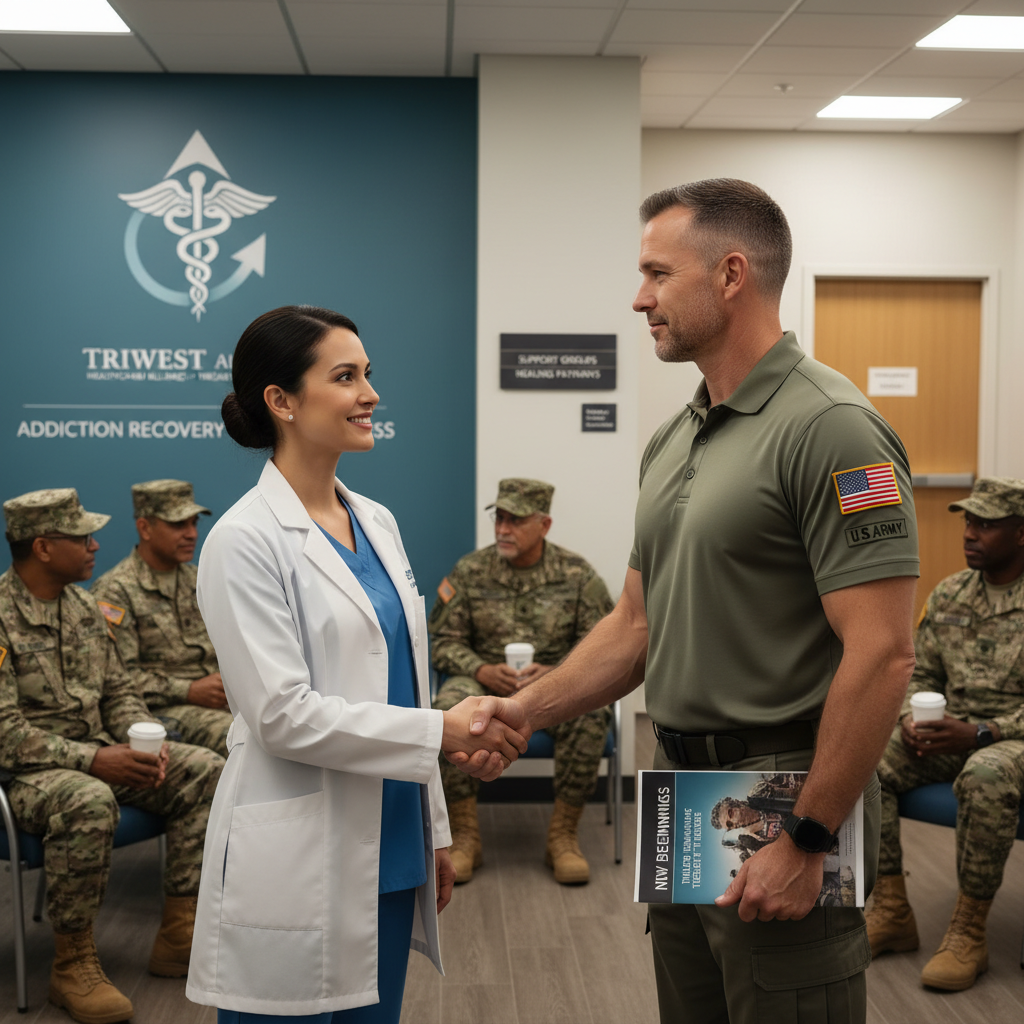
Understanding military addiction treatment with TRICARE
If you are a service member, veteran, or military family member, navigating military addiction treatment with TRICARE can feel complicated at first. TRICARE is the primary health coverage for millions of active duty members, retirees, and their families, including a large number of people seeking help for substance use and mental health concerns [1]. Knowing what TRICARE covers and how to use your benefits can help you step into care with more confidence.
TRICARE recognizes addiction as a treatable medical and psychological condition, not a moral failing. As long as your care is considered medically or psychologically necessary, TRICARE covers a range of substance use disorder services, including detox, rehab, and ongoing therapy [2]. When you choose a TRICARE covered addiction treatment center, you can focus more fully on recovery instead of worrying about every treatment cost.
Why substance use is common in military life
Military service exposes you to unique stressors that can increase the risk of alcohol or drug misuse. Long deployments, repeated combat exposure, family separation, and the pressure to perform at a high level can wear you down over time. Research has linked deployment to Iraq and Afghanistan with increased rates of alcohol misuse among service members, underscoring the need for integrated addiction care in this population [1].
You might notice yourself drinking more to sleep, taking extra medication to calm your nerves, or using substances to numb memories that surface after you leave active duty. These patterns can develop slowly, and it is easy to dismiss them as “just stress” or “temporary.” However, the longer they continue, the harder they can be to manage on your own. Effective military substance abuse rehab TRICARE programs recognize this context and address both what you are using and why you are using it.
Trauma, PTSD, and addiction in veterans
For many veterans and active duty members, trauma and substance use are tightly connected. TRICARE is preparing for a high volume of Iraq and Afghanistan veterans with posttraumatic stress disorder and related mental health issues, and many of these conditions do not fully appear until one to two years after service [1]. If you have noticed delayed reactions, such as nightmares, flashbacks, or sudden anger, you are not alone.
Substance use can become a way to cope with symptoms like:
- Intrusive memories or nightmares
- Hypervigilance and feeling constantly “on guard”
- Avoidance of people, places, or conversations that trigger memories
- Numbness, disconnection, or difficulty feeling joy
The VA and Department of Defense clinical guidelines recommend that care for service members prioritize both substance use and co occurring psychiatric disorders at the same time, rather than treating one and ignoring the other [1]. When you enter a veteran addiction rehab TRICARE West program that follows these guidelines, your treatment team works with you on trauma symptoms, depression, anxiety, and addiction together.
What TRICARE covers for substance use treatment
TRICARE’s coverage for substance use disorders is extensive when treatment is medically or psychologically necessary. This applies to active duty, Guard and Reserve components, retirees, and their families, as long as eligibility is current in the Defense Enrollment Eligibility Reporting System (DEERS) [2]. It is a good idea to confirm your DEERS information before admission to any program.
In general, TRICARE can cover:
- Medically supervised detox for alcohol, opioids, and other substances
- Residential and inpatient rehab programs
- Partial hospitalization and intensive outpatient programs
- Standard outpatient counseling and therapy
- Medication assisted treatment for opioid and alcohol use disorders
- Ongoing monitoring, lab work, and disease testing related to substance use [3]
If you are looking for a drug rehab that accepts TRICARE West, choosing a program that already understands TRICARE requirements can make your admission smoother. Programs that are familiar with TRICARE covered substance abuse program rules typically help you verify benefits, estimate out of pocket costs, and align your treatment plan with TRICARE guidelines.
Levels of care you can access with TRICARE
Addiction recovery is not a single step. TRICARE supports different levels of care, allowing you to enter treatment at the intensity that matches your current needs and then step down as you stabilize.
Medically supervised detox and stabilization
If you are physically dependent on alcohol, opioids, or certain medications, a TRICARE detox and rehab program can be an important first step. Medically supervised detox helps you:
- Manage withdrawal symptoms safely
- Reduce the risk of complications
- Start medications that ease cravings, when appropriate
TRICARE emphasizes that detox is only the initial stage of treatment and is rarely enough on its own for lasting recovery. Detox should lead directly into an ongoing TRICARE addiction recovery program for the best results [3].
Residential and inpatient rehab
Residential or inpatient rehab offers round the clock structure, support, and monitoring. If your environment is triggering, or if you have multiple relapses, this level of care can give you the space you need to focus entirely on healing. Many veterans benefit from entering a TRICARE approved drug rehab center that understands military culture, rank structure, and the realities of service.
In residential care you can expect:
- Daily therapy and groups
- Medication management, if needed
- Peer support with others who understand military life
- A structured daily schedule that keeps you engaged in recovery
Partial hospitalization and intensive outpatient
Once you are more stable, or if you do not need 24 hour supervision, you may step down to a partial hospitalization or intensive outpatient program. These options let you live at home or in a sober living environment while still receiving several hours of treatment per week. For many, this is where you practice using new skills in daily life with strong professional support.
If alcohol is your primary concern, a TRICARE alcohol rehab program or TRICARE West alcohol addiction treatment track can give you targeted support while still addressing other substances and mental health issues.
Standard outpatient therapy and continuing care
Long term recovery often depends on consistent follow up. TRICARE supported programs encourage you to stay in treatment for an adequate duration, and to use both individual and group counseling to maintain progress [3]. In outpatient therapy, you might:
- Meet weekly or biweekly with a therapist
- Participate in veterans groups or relapse prevention groups
- Continue medication management as needed
This stage is also where you integrate new routines, rebuild relationships, and reinforce your sense of purpose.
TRICARE acknowledges that addiction is a chronic, relapsing disease, similar to conditions like diabetes or heart disease, and that relapse calls for adjusting treatment rather than giving up on recovery [3].
Evidence based therapies in TRICARE supported programs
TRICARE encourages addiction treatment that draws on solid research. Treatment for drug addiction under TRICARE follows 13 fundamental principles, including the use of evidence based therapies, medication when appropriate, and continuous assessment of your progress [3].
In a quality substance abuse treatment TRICARE West program, you may work with:
- Cognitive behavioral therapy, to identify and change harmful thought patterns
- Trauma focused therapies, to address PTSD and combat related memories
- Group therapy, to process experiences with peers and practice communication skills
- Family or couples therapy, to repair relationships affected by substance use
Medication assisted treatment can also be part of your plan, especially for opioid or alcohol use disorders. TRICARE views medication as one tool among many, combined with counseling and behavioral therapies for the strongest outcomes [3].
Programs that understand the military emphasize structure, direct communication, and accountability, while also making room for vulnerability and emotional healing. This blend is especially important in any veterans addiction therapy TRICARE track.
Protecting your physical health during treatment
Substance use can affect more than your mood and relationships. Long term use of certain drugs increases the risk of infections such as HIV, hepatitis B, hepatitis C, and tuberculosis. TRICARE supported programs recommend regular monitoring of drug use during treatment and testing for these infectious diseases to protect you and those around you [3].
If you enter a TRICARE West addiction recovery center, your care team may coordinate:
- Screening labs and vaccines
- Primary care follow up
- Education on harm reduction and safer practices
Addressing these medical needs alongside therapy supports your overall wellbeing and keeps your recovery plan comprehensive.
How TRICARE works for different beneficiaries
Your specific TRICARE plan influences how coverage works for addiction treatment. The details vary, but a few general points can help you prepare.
If you have TRICARE For Life and live in the United States or a U.S. territory, you must follow Medicare’s rules when you receive substance abuse treatment [2]. This can affect which facilities you can use and how claims are processed. Confirming your status and asking questions before admission helps prevent billing surprises.
If you have been displaced back to the United States from an overseas location, TRICARE notes that your health coverage continues, and directs you to their displaced resources for more detail on your treatment options [2]. A military rehab that accepts TRICARE West can help you navigate these transitions and maintain continuity of care.
Across all plans, keeping your DEERS information updated is critical. TRICARE bases eligibility and coverage on what is recorded there, so making sure your data is correct can prevent delays in getting into a drug addiction treatment TRICARE West program.
Why veterans choose Centered Health for TRICARE covered care
When you are looking for military addiction treatment with TRICARE, you are not just choosing a coverage option. You are choosing a team, an environment, and an approach to healing. Veterans often seek out Centered Health because it combines TRICARE compatible care with an understanding of military culture and the invisible burdens you may carry.
At Centered Health, your treatment is tailored to your individual needs while still aligning with TRICARE’s research based principles. The team recognizes addiction as a complex but treatable condition and focuses on:
- Addressing co occurring PTSD, depression, and anxiety
- Integrating trauma informed therapies into your plan
- Providing structured, supportive groups with peers who understand service life
- Using medication and counseling together when indicated
If alcohol has become a main coping tool for you, staff can guide you into an alcohol rehab covered by TRICARE West track that fits your clinical needs and your coverage. If other substances are involved, a veteran drug rehab TRICARE insurance path can help you stabilize physically and emotionally, then build a life that feels meaningful again.
A key benefit is that you do not have to manage TRICARE alone. The admissions and billing teams are familiar with addiction treatment that accepts TRICARE West, so they can help you verify benefits, explain deductibles and copays, and work with you to choose the level of care that fits both your clinical situation and your coverage.
Taking the next step with your TRICARE benefits
If your drinking or drug use is starting to control more of your life, waiting rarely makes things easier. TRICARE is designed to support you in getting help as soon as treatment becomes medically or psychologically necessary, not only when things reach a crisis.
You can move forward by:
- Confirming your TRICARE West eligibility and contact information in DEERS.
- Reaching out to a TRICARE covered addiction treatment center that understands military service and veteran needs.
- Asking about program options, including substance abuse therapy TRICARE West and military addiction treatment TRICARE tracks tailored to your experience.
Whether you choose residential care, outpatient therapy, or a structured step down plan, you do not have to navigate this on your own. With the right TRICARE addiction recovery program and a team that respects your service, you can start to rebuild a life that feels steady, connected, and aligned with your values.